MetroHealth gets $2.9M to oversee expansion of opioid prevention and treatment
Published on 11/25/2026
The MetroHealth System received a four-year, $2.9 million grant from the Substance Abuse and Mental Health Services Administration (SAMHSA), part of the U.S. Department of Health and Human Services, to develop a comprehensive opioid overdose prevention and treatment initiative across Cuyahoga County.
As the lead applicant and primary healthcare service provider for the project, MetroHealth will partner with Cleveland Emergency Medical Services (Cleveland EMS) and community organizations to combat Cuyahoga County’s persistently high opioid overdose mortality rate of 27.2 deaths per 100,000 people.
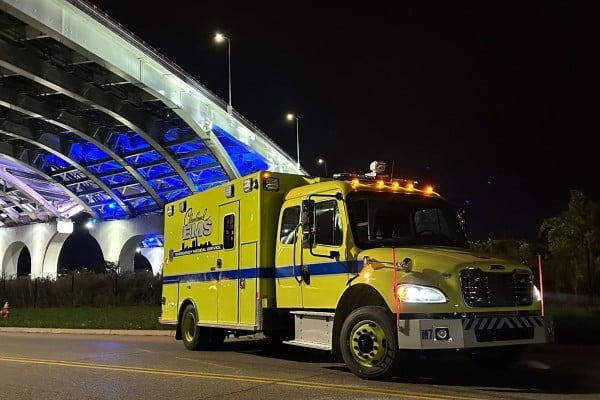
The project’s goals include:
- Expand overdose prevention education and access to naloxone by training first responders and community leaders to respond to opioid overdoses and administer the overdose-reversal medication. Training and naloxone distribution will begin in April 2027 and continue quarterly through September 2030.
- Establish a county-wide system of care that designates select Emergency Departments as Overdose Receiving Centers (ORC), which provide evidence-based treatment for overdoses and substance use disorders.
- Implement protocols that allow Cleveland EMS paramedics to use buprenorphine to treat opioid overdose and opioid use disorder in the field before sending an individual to one of the specialized Emergency Departments.
Under current EMS protocols, patients are typically transported to the nearest Emergency Department, regardless of whether that facility has the specialized resources needed to initiate addiction treatment and support long-term recovery.
“Our goal is to prioritize transport to places like MetroHealth that have a resource-rich environment, so patients get better access to the care and resources they need to take that next step,” said emergency medicine physician and project director Joan Papp, MD, FACEP.
The grant will allow Cleveland EMS to implement protocols that direct appropriate patients to the nearest ORC. There, Emergency Department Substance Use Navigators (SUNs) will conduct an immediate assessment, initiate treatment and connect the patient with recovery services.
The SAMHSA grant will also allow MetroHealth to double its SUN team from two full-time positions to four. That expansion is supported by a one-year, $400,000 grant from the Ohio Department of Health that is being shared with University Hospitals.
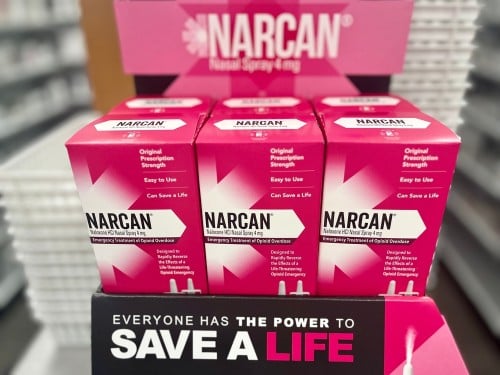 MetroHealth’s emergency physicians also are trained to prescribe buprenorphine and provide naloxone for opioid use disorder, and naltrexone and acamprosate to treat alcohol use disorder.
Dr. Papp said hospitals seeking designation as an ORC will be required to meet a set of standards designed to ensure patients can quickly access medications for addiction treatment and be connected to ongoing recovery support.
The grant will also support individuals who refuse to go to the hospital once they’ve been given naloxone after an overdose, said MetroHealth emergency medicine physician Jeremiah Escajeda, MD, FACEP, FAEMS, Medical Director for the Cleveland Department of Public Safety and leader of MetroHealth's EMS Fellowship program.
While 65% of patients with overdose and substance abuse disorders accepted treatment intervention at MetroHealth between Jan 1, 2024, and May 1, 2026, another 35% refused to go to the hospital.
“This grant hopefully will provide education and resources and treatment options to address those challenges and make it easier for those individuals to get the same initial care they would receive in the hospital,” Dr. Escajeda said.
The City of Cleveland recently launched a Crisis Community Response Bureau to provide alternative responses to emergencies, including immediate support for people experiencing mental health or substance use crises.
Dr. Escajeda said the new bureau could eventually complement the opioid overdose prevention and treatment initiative, creating additional opportunities to connect people in crisis with care and support.
“The hard work that Joan and her team have done over the last 13 years is a testament to what you can accomplish in these unique patient encounters,” he said. “As providers, it feels good. This gives us more things that we can do to treat these patients that we know are difficult to treat inside and outside the hospital. Having federal dollars and a federal agency say that this work is worthy is reassuring.”
Media Contact
Timothy Magaw
Director, System Communications
tmagaw@metrohealth.org
330-606-6241
Recent News



About The MetroHealth System
Founded in 1837, MetroHealth is leading the way to a healthier you and a healthier community through service, teaching, discovery, and teamwork. Cuyahoga County’s public, safety-net hospital system, MetroHealth meets people where they are, providing care through five hospitals, four emergency departments and more than a dozen health centers. For more information, visit metrohealth.org.