Pediatric E-Bike Crash: Size Up More Than the Patient
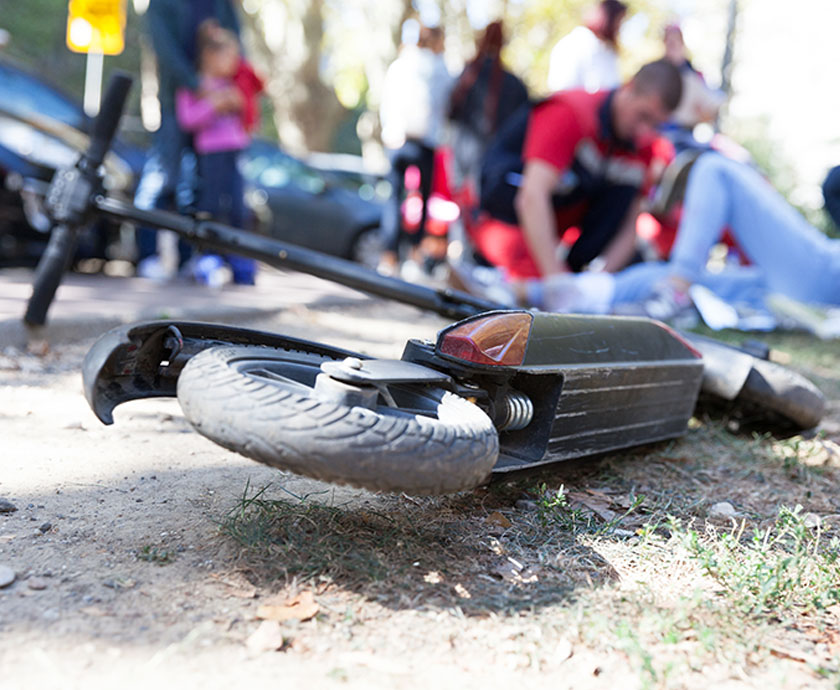
Learn how EMS can size up pediatric e-bike crashes, recognize high-risk mechanisms, activate resources early and include caregivers in care.
FieldBrief Issue 3
Because e-bikes can reach speeds up to 28 mph or more, their kinetic energy profile is closer to a moped or motorcycle collision than a conventional bicycle collision—and far more dangerous as a result. E-bikes are often ridden on a combination of sidewalks and roadways which means also increased risk to pedestrians.
Craig Bates, MD, MS, FACEP, EMS division director for the MetroHealth Department of Emergency Medicine, shares what to do when sizing up the scene of a pediatric e-bike crash.
Identify Immediate Threats and Secure the Roadway
- Make sure there isn’t an immediate threat to you or the patient.
- On an active roadway, confirm that traffic has been stopped or redirected.
- Determine whether you need law enforcement or additional resources.
- Use appropriate personal protective equipment, including a scene safety vest, eye protection and other gear appropriate to the environment.
- Identify who is already on the scene, is in charge and may have reliable information (examples: law enforcement, another responder, caregiver, the driver or a witness).
2. Start the Primary Survey While Your Partner Gathers Information
- Have one clinician begin the primary survey while another gathers information about the crash.
- Perform the rapid assessment of the airway, breathing, circulation, disability and exposure.
- Look for clues to the energy involved, such as e-bike damage, entrapment or ejection, estimated speed, helmet use, road conditions and others.
- When treating a pediatric patient, you’re treating the family unit, not just the child. Involve parents or caregivers as active participants in the care process. Communicate openly and honestly. Include them in decision-making and draw on what they know about their child’s baseline and behavior.
Important: Don’t let a visible injury distract you from an immediate threat to life.
>> Read The First Five Minutes: Is the Child Sicker Than They Look?
3. Follow Protocols When Choosing a Destination for the Patient
Follow regional trauma triage protocols and consider whether there are physiologic clues present like abnormal vital signs, or high-risk anatomy of injury, or high-risk mechanism of injury present when choosing a destination for a pediatric patient. In Northern Ohio, that means following the triage rules outlined in the Northern Ohio Trauma System (NOTS), a regional collaboration launched in 2010 by MetroHealth and Cleveland Clinic.
4. Activate Resources Early
If the scene, mechanism or assessment suggests the need for a trauma center or critical care transport, begin the process early, so resources can move in parallel while crews continue assessment and treatment.
Not all abnormal vital signs carry the same weight. Tachycardia and tachypnea are earlier warning signs that a child is compensating. Take them seriously even when their blood pressure looks normal.
Hypotension, on the other hand, is a very late sign. By the time it appears, the child may already be in an advanced state of shock. Do not be reassured by normal blood pressure and treat abnormal vital signs at any point as important clinical information.
“Time is the most critical and scarce resource you have in trauma care,” Dr. Bates says. “It’s much better to activate additional resources and cancel than not activate and regret it later.”
Key Takeaways
- Secure traffic and identify active threats before approaching.
- Wear a scene safety vest and appropriate PPE on active roadways.
- Assess crash energy, not just the visible injury.
- Use a systematic primary survey despite the emotional intensity.
- Treat the family unit, communicate openly with caregivers and include them in care decisions.
- Tachycardia and tachypnea are early warning signs. Hypotension is a late and serious one.
- Activate trauma and transport resources early when there are clues to high-risk injuries.
Featured Medical Providers
To claim EMS Continuing Education for this edition of FieldBrief, complete a brief survey.
MetroHealth Medical Center is a State of Ohio Approved Continuing Education Site #1202