Learn Your ABCDEs to Check for Skin Cancer
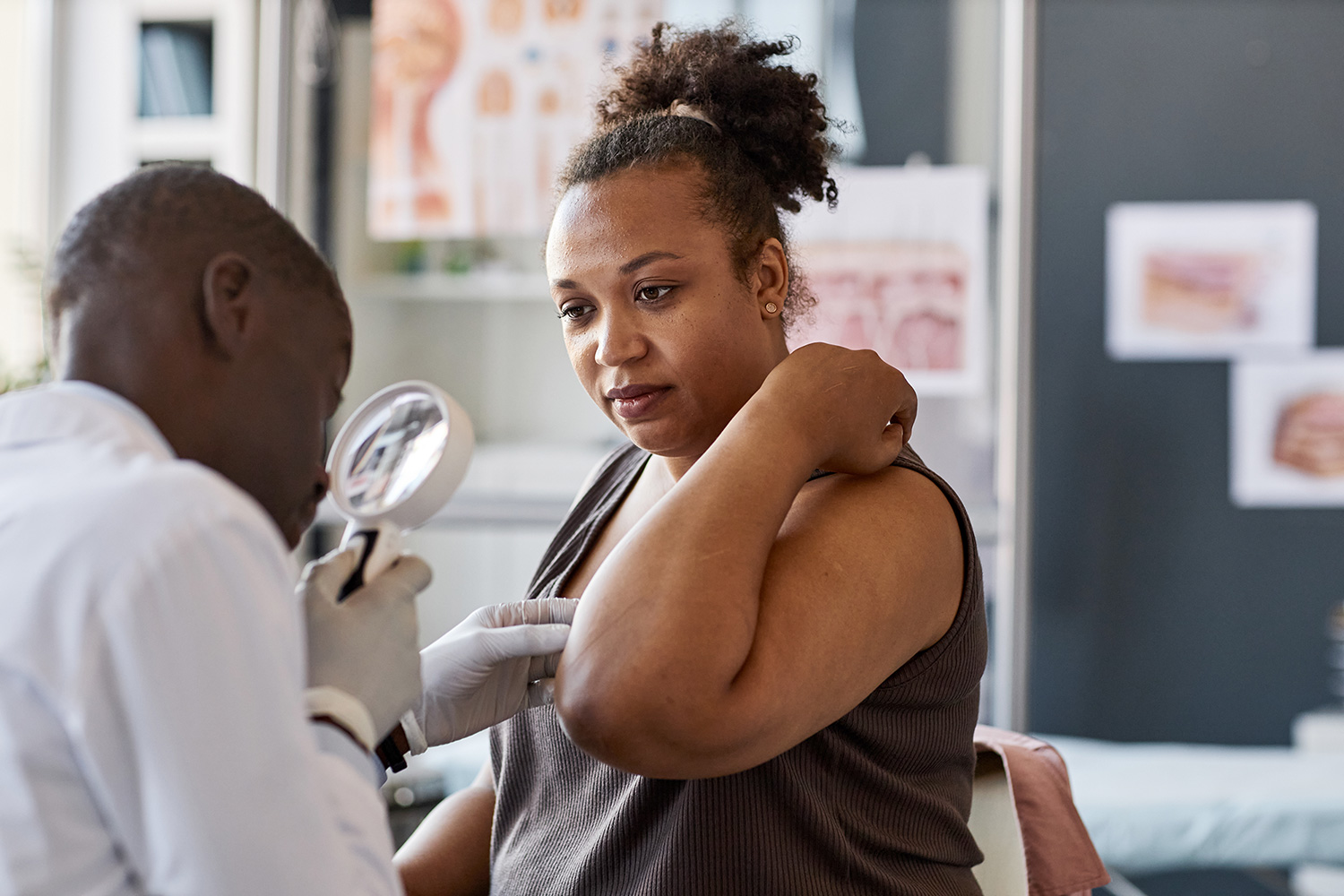
Your skin is talking. Do you know what it’s saying? Learning the ABCDEs of skin cancer can help you spot warning signs early and know when it’s time to see a healthcare provider.
Skin cancer is the most common kind of cancer. While you should do your best to prevent sun damage that can lead to cancer (wear sunscreen!), you also want to keep an eye on any changes in your skin. The best way to do that is to learn the ABCDE guide.
Here’s how it works:
The ABCDEs can help you spot warning signs of melanoma, the most serious type of skin cancer:
- A = Asymmetry (one half doesn't match the other)
- B = Border (edges are uneven or blurry)
- C = Color (the spot has more than one color)
- D = Diameter (larger than a pencil eraser)
- E = Evolving (the spot is changing in size, shape or color or if it starts to itch, bleed, or crust)
If you have a mole of you are unsure about, try MetroHealth’s Snapshot Skin Cancer Screening – a walk-in service to identify spots of concern.
How to do your ABCDE checks
Check your skin every month. Make sure to:
- Be in a well-lit space.
- Use a full-length mirror to check your body.
- Use a hand mirror to check the back of your neck and your scalp.
- Check all areas of your body, even those that don’t get sun. This includes underarms, forearms, fingernails, soles of your feet, and spaces between your toes.
If you notice any suspicious changes, schedule a visit with a dermatologist right away. MetroHealth provides same-day appointments Monday through Friday. See details below.
MetroHealth also has sophisticated skin mapping technology that can keep track of your skin year after year and flag areas of concern.
Schedule an Exam
Referrals are not required. Call 216-778-DERM (3376) to schedule an appointment. For more information, visit metrohealth.org/dermatology.
Need urgent skin care?
Your skin health shouldn’t wait. If you have a rash, acne flare-up, itchy skin or a concerning spot, our specialists are ready to help.
- Appointments can be scheduled at any dermatology location with openings that day.
- Pediatric appointments may be limited.
- Does not include cosmetic consultations or services.
Get same-day appointments Monday through Friday.
Call 216-778-DERM (3376) between 7 and 8 a.m. to schedule.
Your Questions Answered
Q. How often should I check my skin?
It's a good idea to check your skin about once a month. Look for any new moles or spots, or changes to existing ones. Use a mirror or ask a family member to help you check hard-to-see areas, such as your back and scalp.
Q. Am I at risk for skin cancer if I don't spend much time in the sun?
Yes. While sun exposure increases your risk, anyone can develop skin cancer. People of all skin tones should watch for changes in their skin and protect themselves from UV rays by using sunscreen, wearing protective clothing and seeking shade when possible.
Q. When should I see a healthcare provider about a mole or spot on my skin?
Make an appointment if you notice a new spot, a mole that looks different from your others, or any change in a mole's size, shape or color. Skin cancer is often easier to treat when it is found early, so it's important not to ignore changes in your skin.