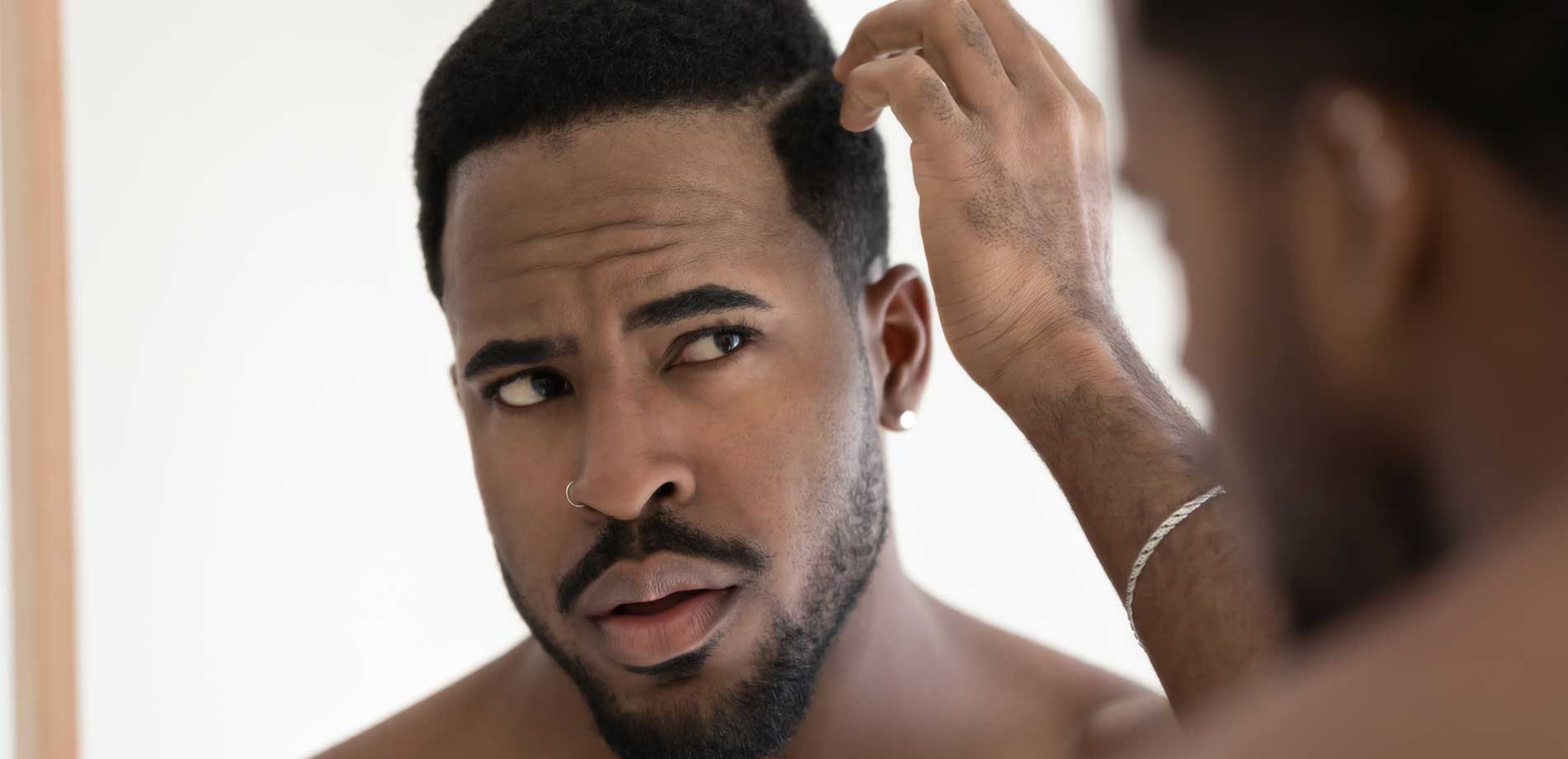
Hair loss can be upsetting and stressful. It can affect how you feel about yourself and your appearance. That’s why it’s important to work with a provider who understands your needs and can help find the cause of your hair loss.
For people of color, hair loss may need special care. Different hair textures and curl patterns can affect how hair breaks, sheds, and responds to treatment.
What Is Alopecia?
Alopecia is a condition that causes hair loss. One common type, called alopecia areata, happens when the body’s immune system attacks the hair follicles, where hair grows.
Alopecia can affect hair anywhere on the body, but it most often affects the scalp and face. Hair may fall out in small, round patches. Some people lose only a small amount of hair, while others may experience more extensive hair loss.
Alopecia affects everyone differently. Some people have only one episode of hair loss, while others have hair loss that comes and goes throughout their lives. In some cases, hair grows back on its own. In others, treatment may be needed to help promote hair growth. While there is no cure, treatments can help manage the condition.
Alopecia in Women of Color
Black women are more likely to develop traction alopecia, a type of hair loss caused by styles that pull tightly on the hair. These styles can include:
- Braids
- Locs
- Extensions
- Weaves
- Tight ponytails or buns
Frequent heat styling and chemical treatments may also damage the hair and increase the risk of hair loss.
Another type of hair loss, called central centrifugal cicatricial alopecia (CCCA), can cause permanent hair loss due to scarring. This condition is common in African American women and may run in families.
Because several types of alopecia can cause scarring, getting the right diagnosis as early as possible is important. Once scarring occurs, the hair may not grow back. Early treatment can help prevent further hair loss.
How MetroHealth Can Help
The MetroHealth Dermatology Center has providers experienced in diagnosing and treating different types of alopecia. They can identify the cause of your hair loss and create a treatment plan that fits your needs.
To find the cause of hair loss, your provider may recommend:
- A scalp examination
- A hair evaluation
- A scalp biopsy
Schedule an Exam
Referrals are not required. Call 216-778-DERM (3376) to schedule an appointment. For more information, visit metrohealth.org/dermatology.
Need urgent skin care?
Your skin health shouldn’t wait. If you have a rash, acne flare-up, itchy skin or a concerning spot, our specialists are ready to help.
- Appointments can be scheduled at any dermatology location with openings that day.
- Pediatric appointments may be limited.
- Does not include cosmetic consultations or services.
Get same-day appointments Monday through Friday.
Call 216-778-DERM (3376) between 7 and 8 a.m. to schedule.
Your Questions Answered
Q: What is alopecia?
A. Alopecia is a condition that causes hair loss. It can happen when the immune system attacks hair follicles or when hair is damaged by other causes. Hair loss may occur in small patches or over larger areas of the scalp.
Q: Why are some women of color at higher risk for certain types of hair loss?
A. Some women of color are more likely to develop traction alopecia, which can be caused by hairstyles that pull tightly on the hair, such as braids, locs, weaves, and extensions. Early diagnosis and treatment can help prevent further hair loss.
Q: When should I see a dermatologist about hair loss?
A. You should see a dermatologist if you notice thinning hair, bald patches, scalp pain, itching, or increased shedding. Getting care early can help identify the cause of hair loss and improve treatment results.