KeyGrip System Reaches a Major Milestone
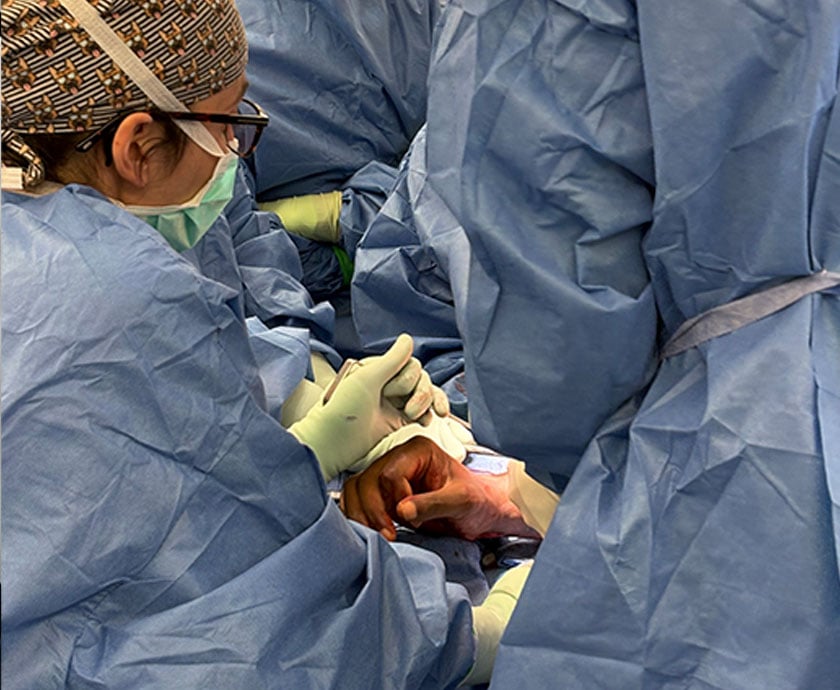
A major milestone for the KeyGrip system brings new hope for helping people with spinal cord injuries regain hand function and independence.
MetroHealth surgeons performed the first-ever implantation of the KeyGrip system earlier this year. The surgery was a major milestone in the development of the device, which is designed to activate paralyzed hand muscles and restore a person's ability to grasp after a cervical spinal cord injury (SCI).
It will be months before the clinical team can fully assess how well the patient—who sustained an SCI that affects his mobility and arm function—can use the implant functionally. Still, the surgery marks a big step forward for the vision of Megan Moynahan, MS, chief architect of KeyGrip and the principal investigator of a clinical trial that began enrolling patients in 2025.
"Here at MetroHealth, we have a long history of doing this type of groundbreaking research and developing, then commercializing, innovative medical devices," says Moynahan. "We're really hoping KeyGrip fits into this track record of success."
Harry Hoyen, MD, orthopedic hand surgeon, and Kyle Chepla, MD, plastic surgeon and hand surgeon, led the three-hour outpatient procedure. It involved a tendon transfer to provide stimulated wrist extension and implantation of a receiver, along with four electrodes placed in key muscles that make it possible to open and close the hand.
The clinical team programmed the implant to provide grasp, and the patient is learning how to use the system to perform functional activities and exercise.
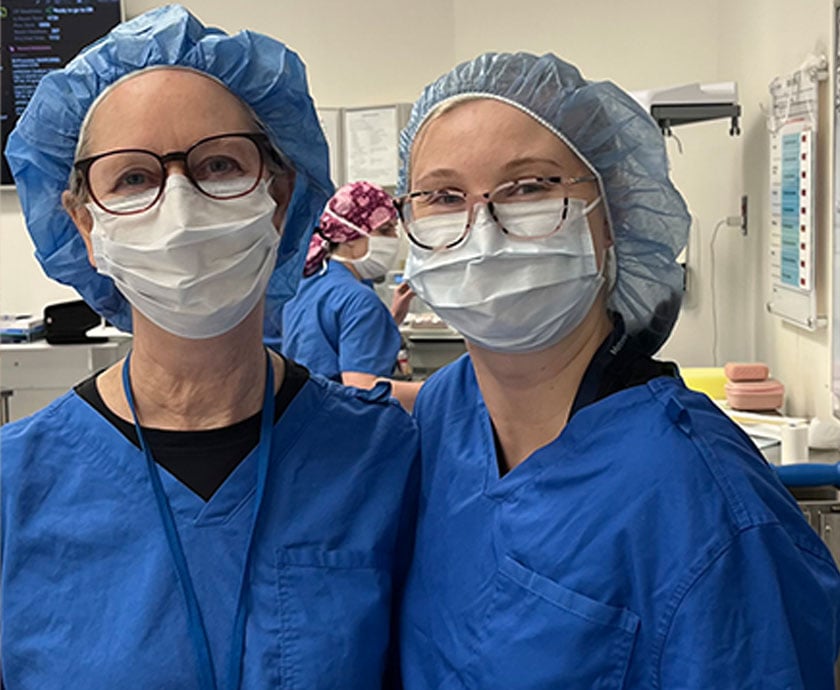
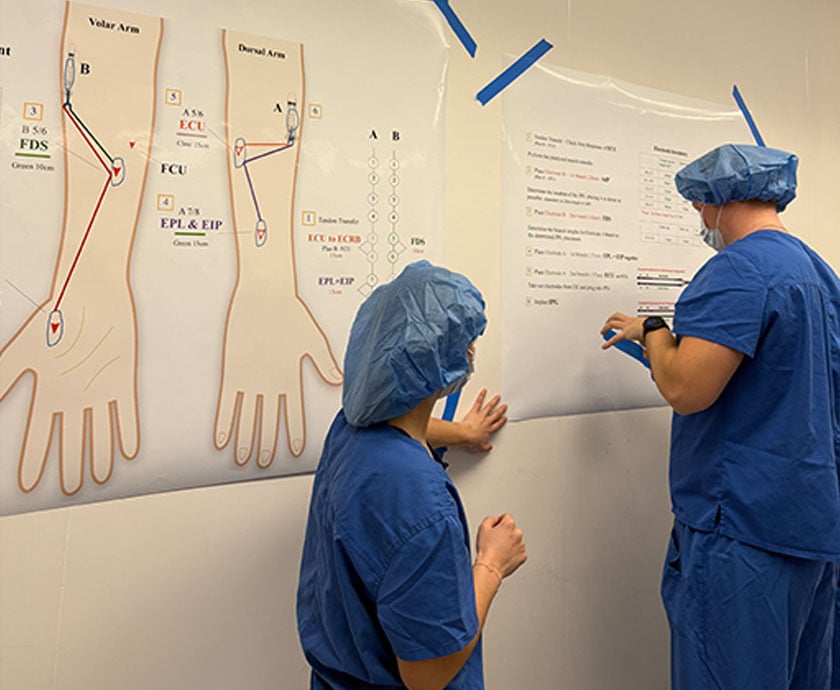
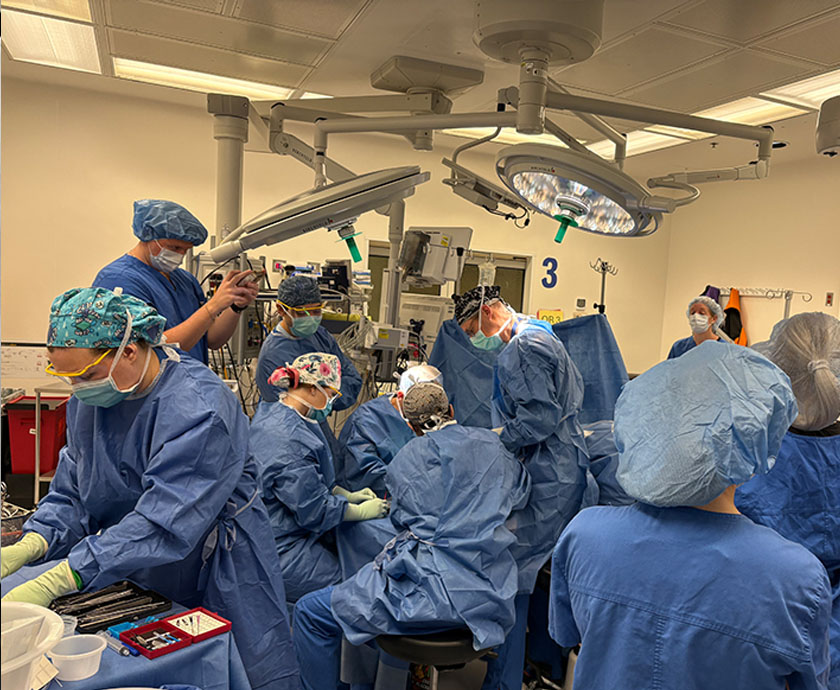
A History of Innovation in Electrical Stimulation
Using electrical stimulation to activate movement in paralyzed hands is not new. More than 40 years ago, MetroHealth and Case Western Reserve University (CWRU) researchers invented an implantable device that uses electrodes to stimulate muscles in the hand.
P. Hunter Peckham, PhD, former co-director of MetroHealth Rehabilitation Institute, and retired orthopedic surgeon Michael Keith, MD, led MetroHealth's hand neuroprosthesis team, which developed the device. It was renamed the Freehand System after being acquired by a Cleveland company, and received U.S. Food and Drug Administration marketing approval in 1997. More than 200 people underwent a Freehand System implantation surgery.
After the company went out of business, researchers at MetroHealth and Case Western Reserve University] continued developing newer versions of the system for investigational use. Moynahan joined that effort in 2013.
A New Direction
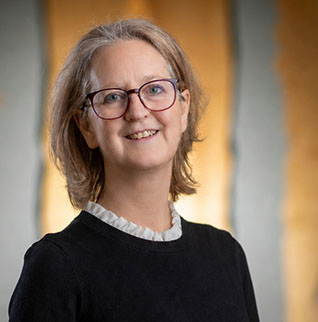
Megan Moynahan, MS, Interim Director of the MetroHealth Center for Spinal Cord Injury Research
About four years ago, Moynahan decided to pursue a new strategy. She reimagined a system that would be smaller, simpler to use and less expensive.
She gathered feedback from patients and other stakeholders and found a commercial implant that met KeyGrip's technical needs. The implant is the Nalu Peripheral Nerve Stimulation (PNS) System, now sold by the medical technology company Boston Scientific. Moynahan and her team developed KeyGrip using components of the Nalu System and custom electrodes.
Since conceptualizing KeyGrip, Moynahan has secured over $2.15 million in funding from several sources, including the Fred A. Lennon Charitable Trust, Case-Coulter Translational Research Partnership, JobsOhio, Ohio Third Frontier, and the JoAnn and Bob Glick Fund for Healthy Communities. The first study participants were recruited in October 2025.
To date, the trial—which is only at MetroHealth—has enrolled three participants. Moynahan hopes to expand the study size to 30.
Plans to Broaden Availability
Researchers collect data on the participant's progress at three, six and 12 months post-surgery, and annually after that. Because the implant is intended for long-term use, the clinical team tracks patient progress indefinitely, unless the patient opts to have the implant removed.
"Successful completion of the trial could help broaden access to the new technology for people with more significant impairments," says Anne Bryden, PhD, OTR/L, associate professor of Physical Medicine and Rehabilitation at CWRU and a research scientist in the MetroHealth Center for Rehabilitation Research (MCRR).
At the start of her career as an occupational therapist in 1993, Dr. Bryden began working on the earlier generation of research led by Dr. Peckham and Dr. Keith. She helped train individuals with SCI to use their systems and assessed the functional results.
"Translation of the KeyGrip system is critical for providing opportunities for increased hand function—an important priority for people with higher levels of SCI—resulting in greater independence and participation in life," Dr. Bryden says.
To learn more, email Moynahan at megan.moynahan@cwru.edu.