About Me
Associate Professor in the Department of Medicine at CWRU
Member of Case Comprehensive Cancer Center
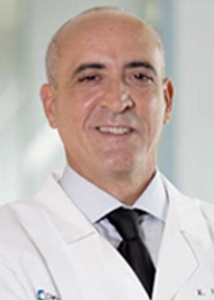
Khalid Sossey-Alaoui, PhD, is Co-Director of the MetroHealth Center for Cancer Research within the MetroHealth Research Institute and Professor of Medicine at Case Western Reserve University (CWRU) School of Medicine, with a secondary appointment in the Department of Biochemistry.
Dr. Sossey-Alaoui received his PhD in Molecular and Cellular Biology from the University of Montpellier, France. He subsequently held junior faculty positions at Roswell Park Cancer Institute and the Cleveland Clinic before joining MetroHealth and CWRU School of Medicine in 2019 as an Associate Professor.
Dr. Sossey-Alaoui is an internationally recognized cancer biologist whose research focuses on triple-negative breast cancer (TNBC), the most aggressive and lethal subtype of breast cancer. His research program has been continuously supported by the National Cancer Institute of the National Institutes of Health, the Department of Defense, the American Cancer Society, and several private foundations. His work has been published in leading journals, including The Journal of Clinical Investigation, Cancer Research, Oncogene, Molecular Cancer, Journal of Extracellular Vesicles, Breast Cancer Research, and Molecular Cancer Research.
His research seeks to elucidate the molecular and signaling pathways that drive the invasion–metastasis cascade in TNBC, mechanisms of tumor immune evasion and therapy resistance, and the biological determinants underlying cancer health disparities. He is a member of the Molecular Oncology Program at the National Cancer Institute-designated Case Comprehensive Cancer Center.
Nationally and internationally, Dr. Sossey-Alaoui serves as a reviewer for numerous high-impact scientific journals and has participated for more than 15 years on peer-review panels and study sections for the National Institutes of Health, the Department of Defense, the American Cancer Society, and several other governmental and private funding agencies.
Contact
The MetroHealth System, Case Western Reserve University School of Medicine
Division of Cancer Biology
MetroHealth Medical Center
Rammelkamp Center for Research, R457
2500 MetroHealth Drive, Cleveland, OH 44109
Phone: 216-778-5275 (office), 216-778-2429 (lab)
FAX: 216-778-4321
email: kxs586@case.edu
email: ksosseyalaoui@metrohealth.org
https://case.edu/cancer/members/member-directory/khalid-sossey-alaoui
Publications
National Library of Medicine – Articles
My research program focuses on understanding the molecular, cellular, and systemic mechanisms that drive cancer progression, metastasis, immune evasion, and cancer health disparities, with a particular emphasis on triple-negative breast cancer (TNBC), one of the most aggressive and therapeutically challenging breast cancer subtypes. By integrating multi-omics technologies, computational biology, and systems-level analyses, my laboratory seeks to uncover the complex networks that regulate tumor evolution and identify novel therapeutic vulnerabilities that can be translated into improved patient outcomes.
A central theme of my research is cancer immunology and immuno-oncology, with a focus on elucidating how tumor-intrinsic signaling pathways shape the tumor microenvironment and suppress anti-tumor immunity. Our studies have identified key roles for the focal adhesion adaptor protein Kindlin-2 (K2) in promoting immune evasion through regulation of cytokine networks, immune checkpoint expression, myeloid cell recruitment, and hematopoietic remodeling. Using single-cell genomics, spatial profiling, proteomics, and functional immunology approaches, we investigate how oncogenic signaling pathways reprogram both local and systemic immune responses to facilitate tumor growth and metastatic dissemination. These studies aim to identify mechanisms of resistance to immunotherapy and develop strategies that enhance anti-tumor immune responses.
A second major focus of my laboratory is the investigation of the biological determinants of cancer health disparities, particularly among women diagnosed with TNBC. African American women experience a disproportionate burden of TNBC, characterized by earlier onset, more aggressive disease, and poorer clinical outcomes. Our research seeks to define the molecular, genetic, and biological factors that contribute to these disparities and how they interact with social and environmental determinants of health. Through the integration of genomic, transcriptomic, epigenomic, and clinical datasets, we have identified the multifunctional RNA-binding protein YB-1–dependent signaling pathways that are differentially activated in tumors from African American women and contribute to therapy resistance, cancer stemness, and disease progression. These studies are aimed at identifying biologically informed strategies that advance precision oncology and reduce disparities in cancer outcomes.
An emerging area of emphasis in my research is the systemic role of tumor-derived small extracellular vesicles (sEVs) in cancer progression, metastasis, and immune suppression. We investigate how tumor-secreted sEVs function as long-range mediators of intercellular communication that remodel local and distant microenvironments, establish pre-metastatic niches, and reprogram immune and stromal cells. Our recent work demonstrates that TNBC-derived sEVs carry oncogenic cargo, including Kindlin-2 and associated signaling complexes, which can be transferred to recipient cells to promote invasion, metastatic colonization, fibroblast activation, and immune dysfunction. We are particularly interested in understanding how sEV-mediated communication contributes to systemic hematopoietic remodeling, expansion of immunosuppressive myeloid populations, and the creation of metastatic-permissive environments throughout the body.
To address these questions, my laboratory employs integrative systems biology approaches, combining multi-omics profiling—including single-cell and spatial transcriptomics, proteomics, phosphoproteomics, epigenomics, extracellular vesicle profiling, and computational network analysis—with mechanistic studies in advanced preclinical models. By integrating large-scale datasets across molecular, cellular, and tissue levels, we seek to construct comprehensive models of tumor progression and identify critical regulatory nodes that can be therapeutically targeted.
Collectively, these research areas converge on a common goal: to understand how oncogenic signaling networks, immune responses, systemic intercellular communication, and biological determinants of health interact to drive cancer progression and metastatic disease. Through the application of multi-omics and systems biology, our long-term objective is to develop innovative therapeutic strategies that inhibit metastasis, overcome immune evasion, reduce cancer health disparities, and improve outcomes for patients with aggressive cancers.