The Gift of Aging in Place
Published on 07/24/2026
 As people age, physical changes inevitably set in. Older adults may become slower on their feet or have diminished balance. They might need more light to see clearly, even in familiar spaces.
Making changes in the home can ensure that it continues to provide a safe environment for healthy aging. The changes can seem minor or small, but they may mean the difference between remaining in their home and moving to an assisted living facility, or even life and death.
MetroHealth recognizes safe, stable housing as a social driver of health and addresses the associated risks through its Aging in Place program, a partnership with Community Housing Solutions that rests under MetroHealth’s Healthy Housing Initiative. The program provides low-cost, high-impact home modifications and occupational therapy assessments that address the risks for falls, enabling low-income patients to age in place for as long as possible.
Falls are a leading cause of injury-related emergency department (ED) visits, hospitalizations and deaths for Ohioans aged 65 and older, according to the Ohio Department of Health. Last year, MetroHealth’s ED logged more than 2,500 fall-related encounters for patients over 60.
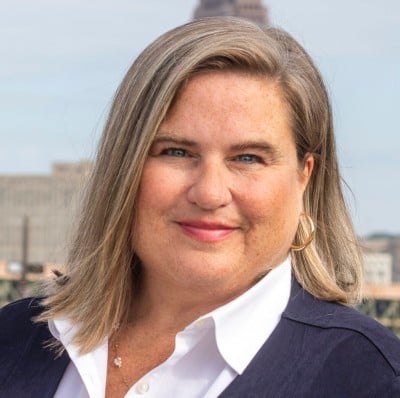 Some of those falls might have been avoided under the Aging in Place program, which sends an occupational therapist and a home inspector to spend time with the person in their home to understand their needs, said Pam Schuellerman, Executive Director of Community Housing Solutions.
“They are engaging with the homeowner to better understand their routine,” she said. “The goal is to do low-cost, high-impact modifications to improve accessibility.”
As people age, Pam noted, their day-to-day living space often becomes more limited. They use their kitchen, the living room, bathroom and bedroom, but even if all these rooms are on one floor, the person could have a harder time maintaining balance to get to those areas, she said.
“For one patient, we mounted grab bars in three places where you normally wouldn’t place them – next to the bed, the toilet and next to the step leading to the garage,” Pam said. “Normally, that wouldn’t be part of our scope. We typically put them in the shower – but this gentleman had a really hard time steadying himself.”
Each individual plan is person-centered, Pam said, and could include changes such as removing throw rugs and securing loose cords or raising a toilet seat.
While those may seem like minor adjustments, older people are often resistant to change, so these can feel like major renovations. Still, most people want to remain in their homes, so they ultimately accept the new safety measures.
In fact, a 2024 AARP survey found that 75% of adults over age 50 want to age in place.
“People don’t want to move. Your house is your home. You feel safe. You feel proud of it. People want to feel independent as long as they can,” Pam said. “People may also want to keep their home and pass it down.”
Studies show that older adults also have an increased sense of well-being when in their own home, and many feel they can live longer in their own house, she added.
In 2025, Community Housing Solutions completed health and safety repairs in 546 homes through its Home Repair Program. This separate pilot partnership with MetroHealth focused on clients requiring a deeper level of intervention, combining occupational therapy assessments with targeted home modifications to better support aging in place.
However, there are many more who need assistance. MetroHealth and Community Housing Solutions would like to expand the program, Pam noted.
Home repairs can make safe housing affordable. “Often the most economical choice is living in the home you have and making it accessible,” she said. “We are preserving independence by providing support in familiar surroundings. It’s invaluable.”
Addressing social drivers of health as the root cause of many health issues is made possible through generous donations. Donors can help their friends and neighbors remain healthy and happy by aging in place. After all, safe housing means stable health.
To support this program, please contact Greg Sanders, Vice President of Philanthropy, at 440-592-1319 and gsanders@metrohealth.org. Make an online gift here.
Your Generosity Means a Healthier Greater Cleveland
Support MetroHealth in its commitment to care for all.