Training Pays Off During Rare Airway Emergency
When every second counts, training helps care teams stay calm and act fast. See how quick thinking made a lifesaving difference.
FieldBrief Issue 3
When Hartford Hall and Khalil Whitworth arrived at a recent call, they found an unresponsive patient with severe trauma and a rapidly deteriorating airway. A motorist who was also an Emergency Department nurse at MetroHealth was already on the scene holding C-spine stabilization.
Hall and Whitworth, paramedics with Sheffield Village Fire Department, log-rolled the patient. They noticed his GCS was 3 and he had Cheyne-Stokes respirations. They suctioned and bagged him, then moved him quickly from the unsafe scene to the back of their ambulance.
Attempts to intubate the patient were unsuccessful, and the pair couldn’t place a supraglottic airway because of the extent of the trauma. Within minutes, they reached the last option in their protocol: a surgical cricothyrotomy.
No Time to Be Nervous
Hall had participated in three previous crics, and Whitworth had never done one. However, he was positioned closest to the patient’s neck. “I didn’t have time to be nervous or excited,” said Whitworth. “It was really just… this patient is going to die without this procedure.”
Hall and Whitworth went over their landmarks, calling them out loud to each other. Then Whitworth made the incision - up, down, left, right - which created the opening for the tube. Hall passed him a bougie to maintain the opening, and they placed a size 6 tube. The team confirmed bilateral lung sounds and chest movement and saw the patient’s oxygenation and capnography improve.
The Flight Team Arrives
Within minutes, the Metro Life Flight team arrived and joined the crew in the ambulance. They reassessed the patient and the surgical airway and placed a chest tube before transporting the patient to MetroHealth Medical Center, a Level I trauma center.
When the patient was airborne, Whitworth could take a moment to appreciate what had just happened.
“I was ecstatic,” he said. “We practice surgical crics a lot, but it was awesome to actually do it. As crazy as this call was, it went pretty smoothly.”
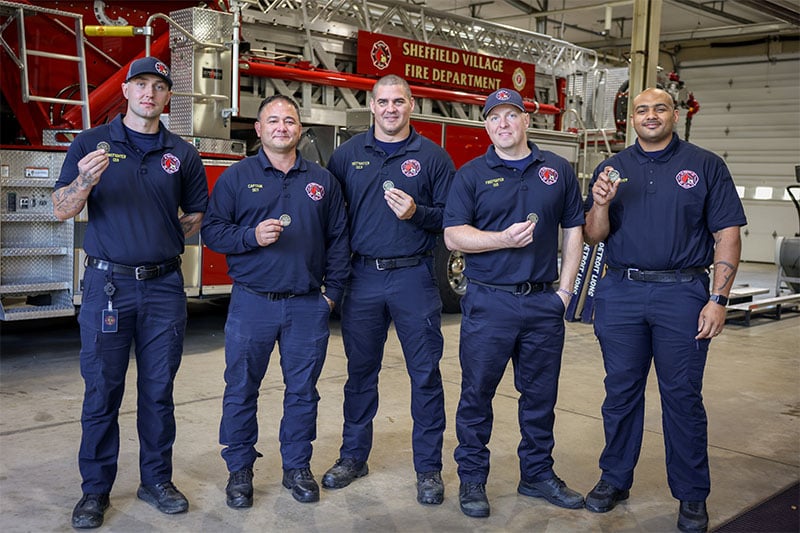
Three other Sheffield Village medics—Capt. Bryan Huge, Bryan Smith and Lucas Roberts—also played key roles, along with the nurse who stopped at the scene and the Metro Life Flight team.
“I was just really proud to be part of the call,” Hall said. “Everybody played a vital role.”
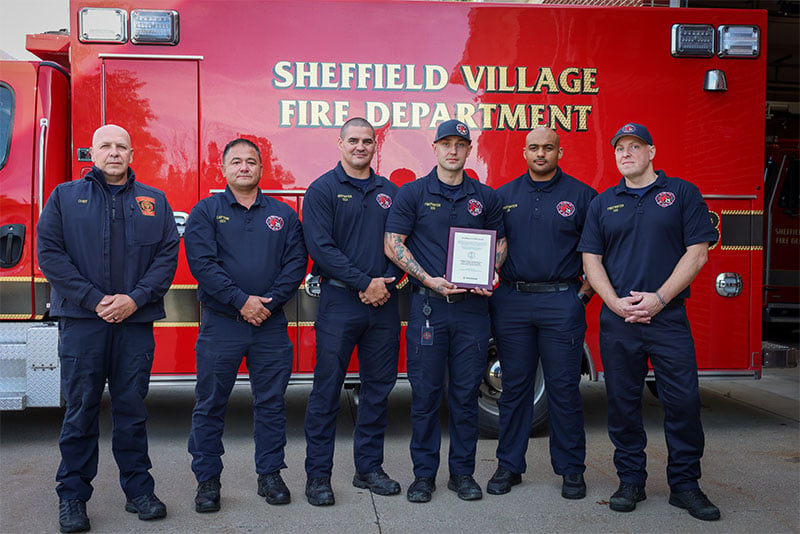
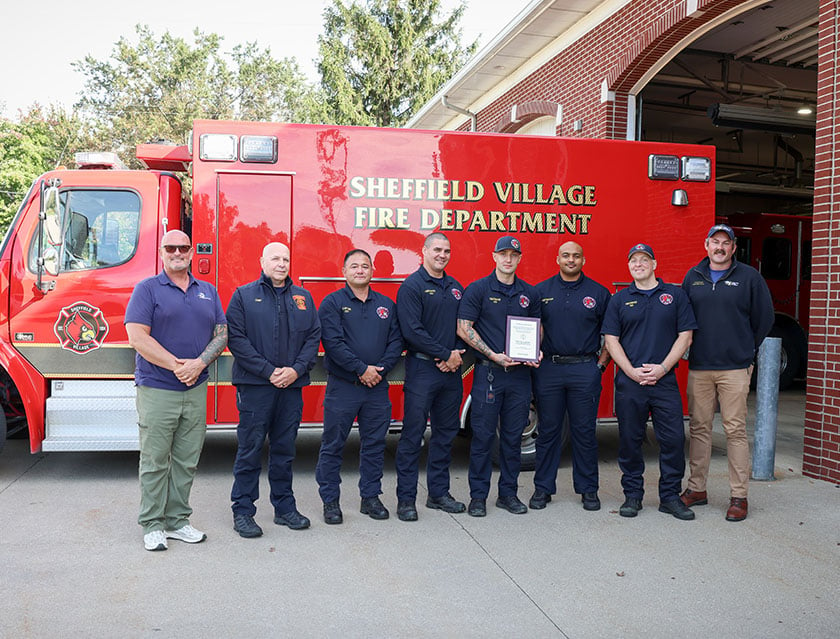
The Sheffield Village Fire Department received an Excellence in EMS award from MetroHealth for their work on this call.
Key Takeaways
- Training saves lives. Regular practice helped the care team respond quickly and confidently during a rare airway emergency.
- Teamwork matters. Doctors, nurses, and specialists worked together to make fast decisions and provide the best care.
- Preparation makes a difference. Having the right skills and emergency plans in place helped the team act when every second counted.
Featured Professionals
To claim EMS Continuing Education for this edition of FieldBrief, complete a brief survey.
MetroHealth Medical Center is a State of Ohio Approved Continuing Education Site #1202