When Agitation Signals a Medical Emergency: A Team Response
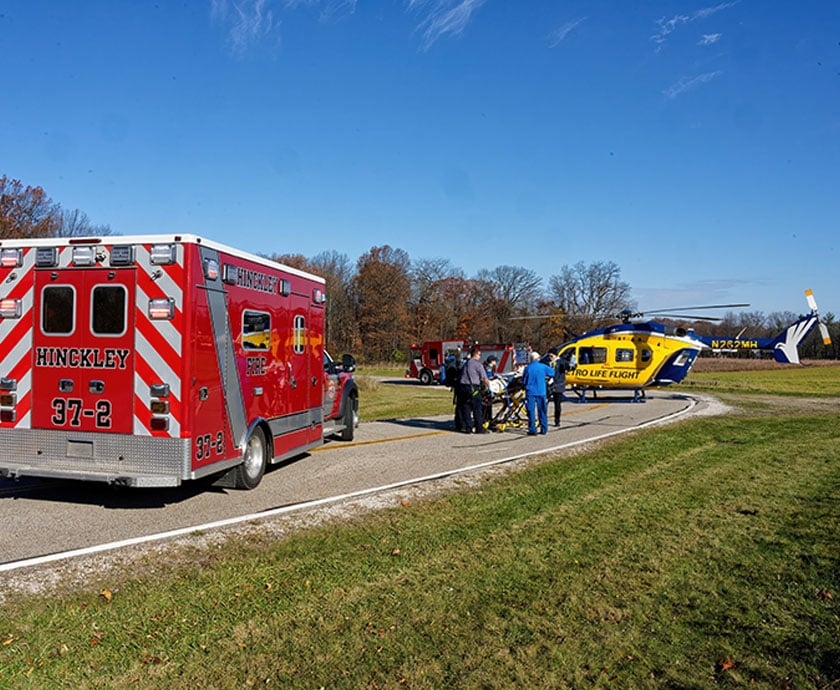
Learn how EMS, law enforcement, Crisis Intervention Teams and emergency departments work together to manage violent emergencies, improve patient outcomes and protect first responders.
FieldBrief Issue 4
Responding to a complex call relies on multiple agencies, skill sets, and coordinated approaches — especially when facing unique circumstances.
Kelleys Island is approximately three to four miles from the mainland. Medical emergencies on the island often involve transportation challenges since access depends on ferry, private boat, or plane. Although the island has its own EMS and ambulance services, transporting patients requires additional coordination with mainland hospitals to determine the best approach for each one.
Whether on scene or working in the background, multiple entities collaborate to reach one shared goal: protect responder safety while achieving the best possible outcome for the patient. “Each of our teammates has a different skill set, and we try to utilize them all to find the best way to help the patient,” says Russell Maust, EMS Director for Kelleys Island.
Here’s what that could look like in a complex case requiring critical care transport.
Please note: The scenario below is fictional and does not represent an actual person, patient or real-life situation.
Arrival
At 3 a.m., dispatch reports a person walking along a remote roadway who appears confused, agitated and potentially violent. You arrive on scene to provide medical care.
Law enforcement has already secured the area. Officers report that the patient is behaving erratically, acting aggressively and hyperventilating. After confirming that it is safe to approach, you prepare to begin your primary assessment.
When the emergency call came in, dispatch simultaneously notified law enforcement and EMS.
A police unit was sent immediately and instructed to coordinate with EMS on arrival. Before you reach the scene, officers have already gathered valuable information and determined that the patient is highly agitated and difficult to calm.
Assessment
Law enforcement indicates it is safe to approach and begin a medical evaluation. As you move closer, the patient begins yelling, flailing and making verbal threats.
You and your partner use verbal de-escalation techniques. Although no Crisis Intervention Team (CIT) is available on the island, your partner has completed CIT training. During the interaction, the patient reveals that she recently learned of her father's death.
At first, the situation appears to be a behavioral health emergency. However, persistent agitation combined with tachycardia, hypotension and diaphoresis suggests a potentially life-threatening medical condition.
When the patient suddenly begins vomiting blood, the urgency becomes clear. Immediate intervention and rapid transport are critical.
With the last ferry having departed for the night, air medical transport is the only option. You request Metro Life Flight and contact medical control to determine the safest treatment and transport plan.
As field crews manage the patient, the Metro Life Flight team begins coordinating resources for transport, including blood products and medications needed to address both agitation and suspected blood loss.
At the same time, dispatch alerts the Emergency Department to the patient's condition. Advance notification allows hospital staff to prepare for a critically ill patient showing signs of shock and behavioral distress.
Specialists, equipment and treatment resources are mobilized before the patient even arrives.
Transport
The Metro Life Flight crew arrives and administers protocol-based sedation to safely manage the patient's agitation. Once stabilized, the patient is secured in the aircraft and transported to the Emergency Department.
While the patient is in flight, Emergency Department teams continue preparing for arrival. Physicians, nurses and support staff coordinate care plans to address both the patient's acute blood loss and behavioral health needs.
Hospital Care
For EMS and flight crews, the call concludes when the patient is safely transferred to hospital staff.
Hospital evaluation reveals an upper gastrointestinal bleed caused by ruptured esophageal varices. The patient receives blood transfusions and specialized treatment to control the bleeding.
Following treatment, she makes a full recovery.
The Bigger Picture
Every emergency call reveals only part of the story. While frontline responders focus on patient assessment, treatment and transport, a larger network of dispatchers, law enforcement officers, flight crews, physicians and hospital staff works behind the scenes to ensure seamless care. Their coordinated efforts help deliver the right treatment at the right time while maintaining the safety of patients and responders alike.
Every call looks different, but the goal stays the same: get the patient the right care while keeping responders safe. Want to strengthen coordination with your agency? Contact XYZ at to NUMBER to talk about joint training and other opportunities.
Key Takeaways
- Agitation can be a symptom, not just a behavior. Rule out medical causes such as shock, hypoxia or hypoglycemia
- Coordinated early communication between EMS, dispatch, medical control, law enforcement and the hospital means the team is ready when you arrive.
- Recovery continues after discharge, through case managers, social workers and community partners.
To claim EMS Continuing Education for this edition of FieldBrief, complete a brief survey.
MetroHealth Medical Center is a State of Ohio Approved Continuing Education Site #1202