Where Health Meets Justice: Karen Cook, Natalie Harper and Kathy Plummer on the Transformative Power of the Community Advocacy Program (CAP)
Published on 06/23/2026
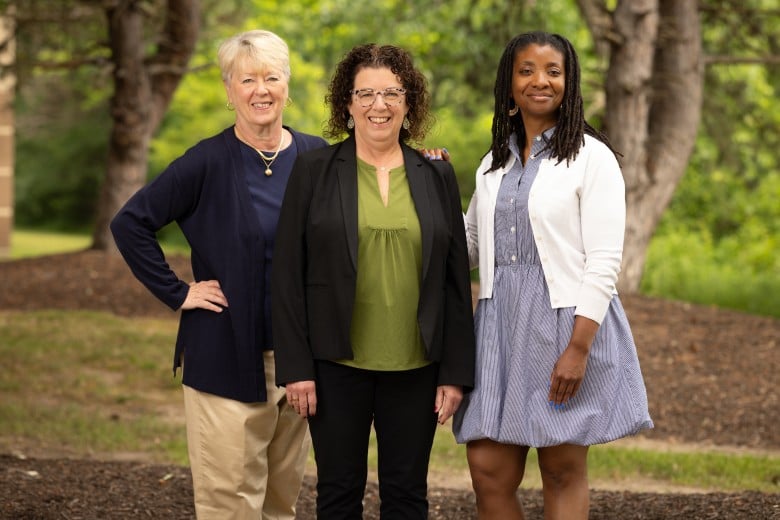
Kathy Plummer, Karen Cook and Natalie Harper
Like most medical-legal partnerships (MLPs), MetroHealth’s Community Advocacy Program (CAP) got its start in the Department of Pediatrics, helping children and their families with education, housing, government benefits and employment issues. But MetroHealth providers soon recognized that legal advocacy could help many more patients throughout the health system.
“CAP was the first MLP in the country to reach beyond the pediatrician’s office,” said Kathy Plummer, Director of Grants and Proposals for The MetroHealth Foundation. “A significant grant from the Robert Wood Johnson Foundation and a coalition of local funders allowed us to expand services to several community health centers to address the concerns of older adults, Spanish-speaking patients and recent immigrants, and those recently released from incarceration.”
Building on that expansion, for more than two decades, CAP has quietly been changing the trajectory of patients’ lives – one legal hurdle, one housing crisis, one urgent consultation at a time. What began in 2002 as a small, pioneering collaboration between MetroHealth and The Legal Aid Society of Cleveland has grown into one of the nation’s longest‑running and most comprehensive medical‑legal partnerships. And today, leaders like Karen Cook and Natalie Harper help uphold the partnership that makes this program so impactful.
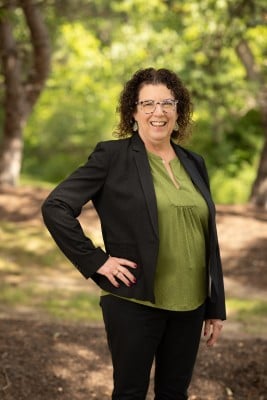 “Many of our patients face tremendous life challenges,” said Karen Cook, MPH, Executive Director of Social and Community Health at the Institute for H.O.P.E.™. “They may be dealing with unsafe housing, eviction, immigration hurdles or loss of critical benefits. And most simply don’t have the resources to get legal guidance. CAP gives them a lifeline right inside their doctor’s office.”
A Simple Idea with Profound Impact
The premise of CAP is simple: When a patient’s health is jeopardized by a legal or structural barrier, their care team can refer them directly to a Legal Aid attorney – just as they would to a specialist. That referral happens right in Epic, and the attorney becomes part of the care team, addressing the upstream issue that stands in the way of good health.
 “Often, the referral comes during a routine visit,” said Natalie Harper, Community Health Advocacy Initiative Manager. “Their provider has been trained to recognize when a patient’s health concern is tied to a legal concern. That’s what’s so powerful about CAP. It’s holistic, it’s built into the clinical workflow, and the patient doesn’t have to figure out where to go or how to get help on their own.”
Last year alone, CAP attorneys handled 400 cases impacting nearly 1,200 household members. The issues span the full spectrum of social drivers of health:
- special education and IEP advocacy
- housing safety, conditions issues impacting health including lead poisoning, eviction prevention and landlord disputes
- legal status/immigration issues for victims of crime or violence
- public benefits such as SNAP, Medicaid, SSI and SSDI
- support for seniors
- legal needs of pregnant and newly parenting families
- civil legal help for individuals with opioid use disorder
Behind each data point is a patient whose stability – and often safety – was on the line.
“Sometimes all it takes is one call.”
While some cases require months of legal work, others are resolved with guidance, a letter or a single conversation. “Not every patient needs full representation,” Karen explained. “Sometimes they just need help filling out an application or understanding their rights.”
Embedded at sites across MetroHealth – from Pediatrics and Obstetrics to the Broadway Health Center, Buckeye Health Center, Ohio City, Old Brooklyn and the Office of Opioid Safety – CAP attorneys also provide curbside consultations to clinicians, helping them advocate effectively before a legal case even begins.
“Providers are participants in this partnership as much as patients are,” Natalie added. “They’re trained extensively to spot the issues that affect their patients’ ability to get well.”
A Pathway to Stability – And a Chance to Avoid Lifelong Consequences
Of all the issues CAP tackles, housing is among the most urgent.
“When someone gets an eviction on their record, it follows them,” Natalie said. “Even if they find a new place, that mark makes it incredibly difficult to secure stable housing long-term. So, preventing an eviction, even once, can change the trajectory of a family’s future.”
The same is true for a child finally receiving the special education supports to which they’re legally entitled, or an older adult restoring access to the benefits that keep them safe and independent.
Why Philanthropy Matters Now
CAP’s model works – and its success is widely recognized. Medical‑legal partnerships across the country have been shown to reduce stress, improve mental health, boost medication adherence and even decrease avoidable emergency department use. But maintaining the program is costly, and MetroHealth’s annual contract with Legal Aid covers only a portion of the work.
“We are incredibly proud of what CAP provides,” Karen said. “But we don’t yet have universal coverage for all the patients who need this support. Donor generosity ensures that we can sustain CAP at its current level – and someday expand it so every patient with a legal barrier to health has access to the help they deserve.”
“Investing in CAP is investing in justice and long‑term stability,” Natalie said. “It’s saying: everyone deserves the chance to be healthy. And sometimes, the only thing standing between a patient and stability is a legal issue they cannot face alone.”
To support the Community Advocacy Program, please contact Greg Sanders, Vice President of Philanthropy, at 440‑592‑1319 or gsanders@metrohealth.org.
Your Generosity Means a Healthier Greater Cleveland
Support MetroHealth in its commitment to care for all.