When Health Needs a Legal Advocate: Jessica Baaklini and the Healing Hope of the Community Advocacy Program
Published on 06/17/2026
Jessica Baaklini practices law where healthcare happens – alongside physicians, psychologists, nurses, social workers and families facing some of the most challenging moments of their lives. Inside MetroHealth, legal advocacy is not separate from care; it is part of how patients and families are supported, protected and empowered.
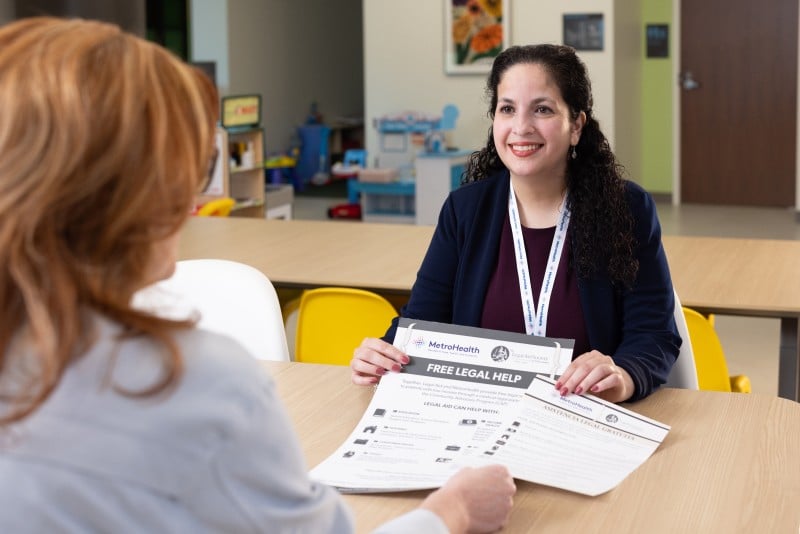
As a senior attorney with the Legal Aid Society of Cleveland, Jessica works with the Community Advocacy Program (CAP), a medical-legal partnership between MetroHealth and Legal Aid. She is embedded directly within Pediatrics and Obstetrics at the Main Campus. Medical-Legal Partnerships, like CAP, reflect a powerful message: that integrating legal professionals in healthcare settings helps providers and systems address the root causes of poor health outcomes.
Health is shaped not only by medicine, but also by the complex situations and systems families navigate every day. Jessica and her CAP colleagues feel honored to work with their partners in medicine to improve the health and well-being of patients and communities.
Jessica learned about medical‑legal partnerships (MLPs) while in law school, where she worked with an MLP serving children and families who have low incomes. She volunteered with CAP before joining the program full-time.
More than a decade later, she has built her career around helping families remove civil legal barriers to health, particularly those involving education services and health and public benefits supports for children and parents with medical conditions and disabilities. Legal Aid and MetroHealth work together to improve health outcomes and ensure dignity and justice.
Working inside the hospital changes everything. Families already carrying the weight of medical appointments and diagnoses can receive legal help in the very same place they receive care. That proximity reduces stress, eliminates logistical hurdles and allows advocacy to happen in real time.
Jessica also trains MetroHealth caregivers to recognize health-harming legal issues and collaborates with providers on systemic advocacy. Through didactic lectures, meetings and day‑to‑day collaboration, providers learn how concerns about education and school supports, food security, benefits or medical insurance coverage, and housing and utility security may signal deeper legal problems. When those moments arise, referrals happen seamlessly – often the same day.
One case still stands out vividly to Jessica.
A mother came to MetroHealth caring for two sons, both living with disabilities, while managing health challenges of her own.
One child was diagnosed with severe autism spectrum disorder and was often non-speaking due to his disabilities. Because his needs were complex, he was placed on home instruction but was not receiving all the support outlined in his Individualized Education Program (IEP). His progress slowed as his challenges increased.
His brother, diagnosed with ADHD and learning disabilities, also had an IEP. However, the supports outlined in the plan weren’t being provided, and he needed more support to better meet his needs.
“Mom was doing absolutely everything she could. She was a great advocate for her sons,” Jessica said. “But their mom felt she needed more help with navigating the complicated situation and systems impacting the health of her children.”
The children’s pediatrician, who is familiar with CAP and recognized that the challenges extended beyond medical care, personally connected the family with Jessica during the same clinic visit.
Jessica represented the family in education meetings for both children, collaborating with the school district and advocating for appropriate services and learning environments. Jessica and the pediatrician worked together to identify helpful supports for both children so she could share this information with the school team.
For the child with severe autism, she worked with the school district to secure placement in a specialized educational setting designed to meet his unique needs and added more supports and therapies. For his brother, she helped ensure his education plan was improved and delivered in a way that supported his success.
The impact was transformational. Both children began making educational progress in new settings that met their needs and felt happy about going to school. Their mother, no longer navigating these challenges alone, gained stability and relief, allowing her to care for her own health while continuing to advocate for her sons.
Stories like this illustrate why the Community Advocacy Program exists and why philanthropic support is essential to its success. CAP depends on donors to keep attorneys embedded within care settings, train providers and respond quickly when families face legal challenges that threaten their health and stability.
With donor support, CAP can continue to:
- Keep attorneys rooted inside clinics
- Train many caregivers to identify civil legal barriers to health
- Step in early when families are at risk of losing stability
When legal advocacy becomes part of healthcare, patients don’t have to navigate complex systems alone. Through CAP, families receive the support they need to heal, advocate and move forward with dignity and hope.
For more information, please contact Greg Sanders, Vice President of Philanthropy, at 440‑592‑1319 or gsanders@metrohealth.org.
Your Generosity Means a Healthier Greater Cleveland
Support MetroHealth in its commitment to care for all.