Healing Starts with Showing Up
Published on 06/09/2026
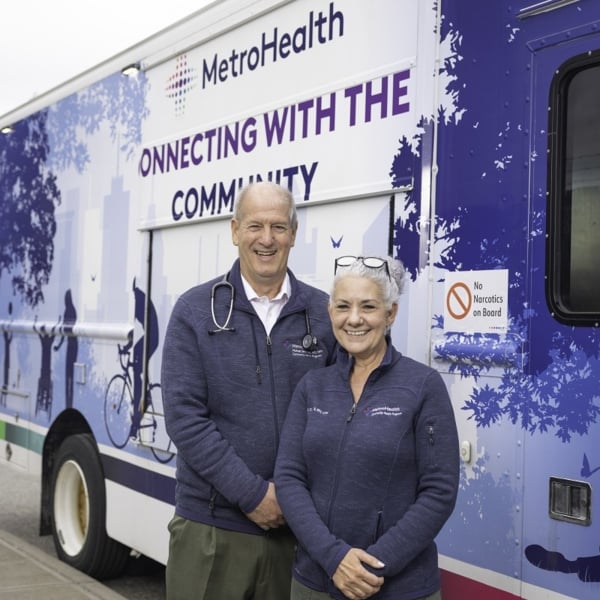
Michael Seidman, MD, and Bridget Gill, RN, stand alongside a mobile unit that brings care to the men’s shelter at 2100 Lakeside in Cleveland.
For Michael Seidman, MD, and Bridget Gill, RN, healthcare begins with presence.
Since 2020, MetroHealth’s Healthcare for Those Experiencing Homelessness program has provided a lifeline for individuals across Cuyahoga County living without stable housing. What began as an urgent COVID-19 response has evolved into a sustainable primary care model – one that delivers consistent, compassionate healthcare directly to people who often have nowhere else to turn. Since shifting its focus from pandemic response to primary care in 2022, the program’s impact has steadily grown.
Decades of Commitment, One Shared Mission
Between them, Dr. Seidman and Bridget represent more than five decades of service to MetroHealth. A Family Medicine Physician and Assistant Professor at Case Western Reserve University School of Medicine, Dr. Seidman has spent 26 years caring for patients across family medicine, express care, correctional medicine and homeless healthcare. Bridget, a Registered Nurse and Director of Quality and Community Health Programs, has dedicated nearly 28 years to shaping how care reaches the community – overseeing mobile clinics, correctional health services and care at high-impact sites throughout the county.
Their shared philosophy is simple: healthcare works best when it meets people where they are.
Reducing Barriers by Meeting People Where They Are
For individuals experiencing homelessness, accessing care is layered with barriers – transportation challenges, lack of insurance, competing daily priorities and deep mistrust built from years of marginalization. MetroHealth’s Community Health teams partner with shelters, day centers and supportive housing sites to work daily to reduce these barriers to care.
Mobile teams deploy more than 30 times each month, traveling to 10 to 15 locations across the county to deliver essential services where people already are. Care includes treatment for acute illnesses, management of chronic conditions like diabetes and hypertension, cancer screenings, immunizations, behavioral health support and connections to ongoing primary and specialty care within MetroHealth.
Since 2022, when the program’s focus formally shifted from COVID response to primary care, the mobile units alone have provided more than 8,000 patient visits, not including care delivered at MetroHealth’s Collinwood Health Center.
Consistency Builds Trust
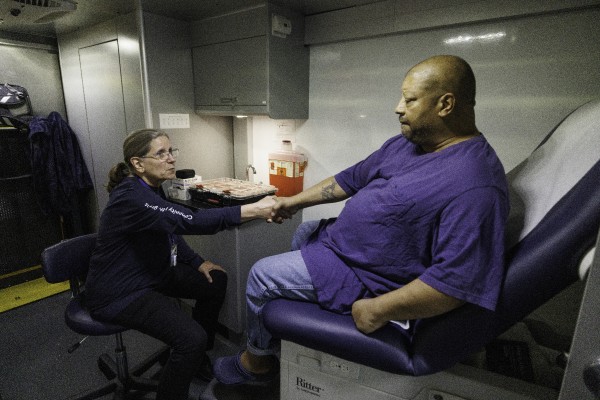
At the heart of the model is consistency – a principle Bridget is intentional about protecting.
She ensures the same care teams return to the same locations repeatedly: the same physician, the same nurses, the same familiar presence.
“Trust is hard to develop and easy to break,” Dr. Seidman said. “People didn’t think we were coming back. But we did throughout the pandemic and after it.”
Because teams are present and trusted, cancers are detected earlier through onsite prostate cancer screenings and mobile mammography. Patients are more likely to accept follow-up care because relationships already exist.
Showing Up, Again and Again
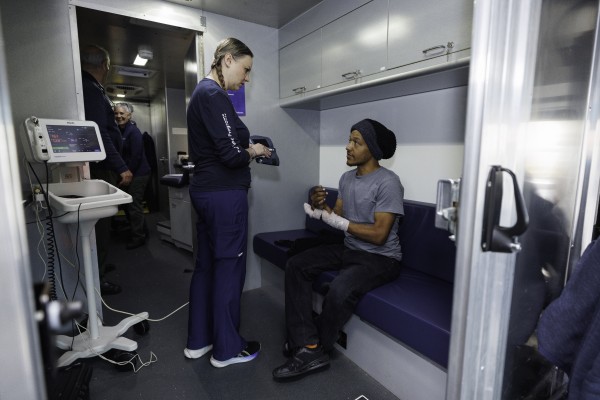
Dr. Seidman recalls caring for a man living unsheltered who suffered severe third-degree burns to both feet during the winter. He refused hospitalization and clinical settings, but he allowed conversation.
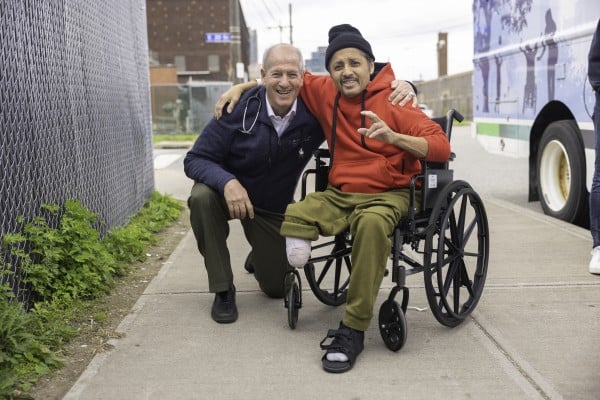
Over seven months, the mobile team returned again and again – providing wound care, preventing infection and slowly building trust. Eventually, he walked again. With help from community partners, he moved into housing.
“This didn’t happen in one visit,” Dr. Seidman said. “It happened because we kept showing up."
How You Can Help
To sustain and expand this work, The MetroHealth Foundation has set a philanthropic goal of $300,000. These dollars support the mobile clinics themselves – the vehicles, equipment and care teams that make healthcare possible outside traditional walls.
“It’s the mobile unit that allows MetroHealth to go to people whose circumstances make it challenging to get to us,” Dr. Seidman said. “It’s how we live our mission of care for all.”
YOUR IMPACT
To support Healthcare for Those Experiencing Homelessness, please contact Greg Sanders, Vice President of Philanthropy, at 440‑592‑1319 or gsanders@metrohealth.org. Or, click here to make a donation.
Your Generosity Means a Healthier Greater Cleveland
Support MetroHealth in its commitment to care for all.