Healing Starts With Showing Up
Published on 03/17/2026
Since 2020, the work of MetroHealth’s Community Health team has been nothing short of a lifeline for individuals experiencing homelessness across Cuyahoga County.
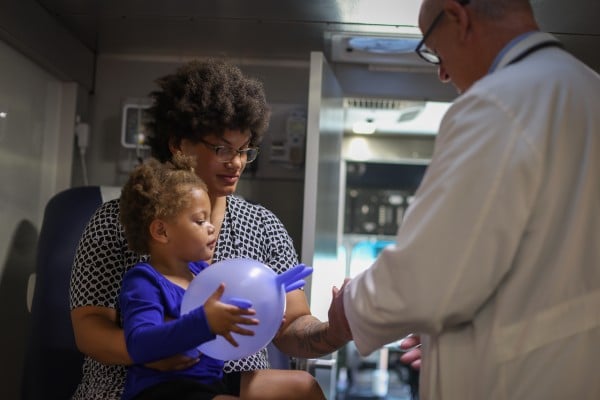
What began as an urgent COVID-19 response has grown into an enduring commitment: bringing compassionate, accessible and consistent healthcare directly to people who often have nowhere else to turn. Today, Healthcare for Those Experiencing Homelessness stands as one of The MetroHealth Foundation’s top giving priorities because the need has not gone away.
For caregivers like Dr. Michael Seidman and Bridget Gill, this work is personal.
Between them, they represent more than five decades of service to MetroHealth. Dr. Seidman, a family medicine physician and assistant professor at Case Western Reserve University School of Medicine, has devoted 26 years to caring for patients across family medicine, express care, correctional medicine and homeless healthcare.
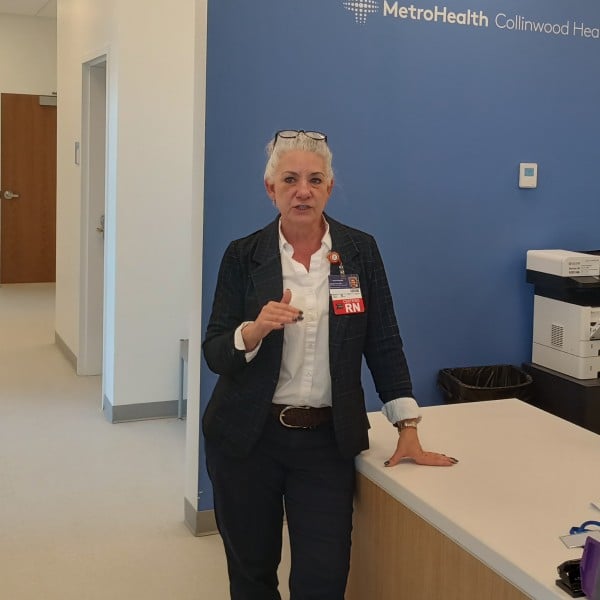 Bridget Gill, a registered nurse and Director of Quality and Community Health Programs, has spent nearly 28 years shaping how care reaches the community – overseeing mobile clinics, correctional health services and care at sites like the Collinwood Health Center at the Greater Cleveland Food Bank Resource Center.
Their work embodies MetroHealth’s mission in action.
Meeting People Where They Are
For individuals experiencing homelessness, healthcare access is layered with barriers – transportation challenges, competing daily priorities, lack of insurance and deep mistrust built from years of marginalization. That’s why MetroHealth doesn’t wait for patients to come to them.
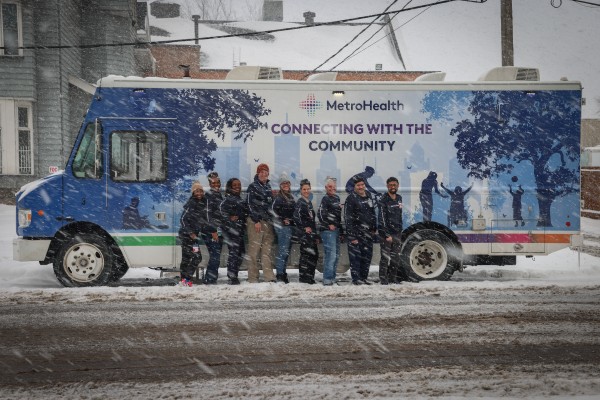
Instead, the Community Health team partners with local nonprofit organizations to meet patients where they are: in shelters, day centers, supportive housing sites and on mobile clinics positioned just outside their doors.
Each month, mobile teams visit 10 to 15 locations across the county, providing a wide range of essential services:
- Treatment for everyday health concerns
- Management of chronic conditions like diabetes, hypertension and heart disease
- Cancer screenings and preventive care
- Immunizations and infectious disease testing
- Behavioral health support
- Assistance with social determinants of health
- Connection to ongoing primary and specialty care within MetroHealth
At the heart of this model is consistency.
Bridget is meticulous about assigning the same care teams to the same locations., the same physician and the same nurses – again and again.
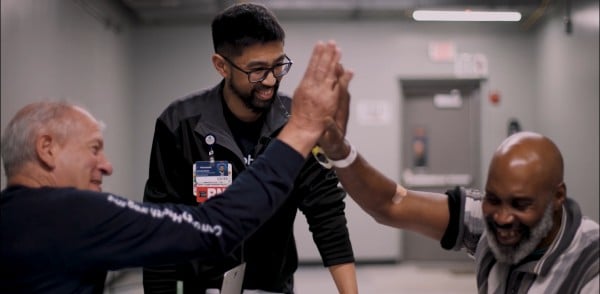
“Trust is hard to develop and easy to break,” Dr. Seidman says. “People didn’t think we were coming back. But we did. Through the pandemic. After the pandemic.”
And people noticed.
At a cancer screening event at the men’s shelter on Lakeside Avenue, two men approached the care tables. One hesitated. The other smiled and reassured him:
“They’re from Metro. It’s cool. You can trust them.”
That moment captured years of quiet, consistent care.
When Early Access Saves Lives
Because mobile teams are present, cancers are caught earlier. Prostate cancer screenings conducted onsite have led to diagnoses and treatment that may never have happened otherwise. Mobile mammography brings breast cancer screening directly to women who might not have access to transportation or feel safe walking into a traditional clinical setting. Care teams ensure follow-up appointments happen.
This is what removing barriers looks like.
It’s also what prevents emergencies. A planned mobile EKG unit – funded through philanthropy – will help clinicians determine whether chest pain requires an ambulance call or can be safely managed on site. That protects patients and preserves critical EMS resources for the broader community.
A Story of Trust and Time
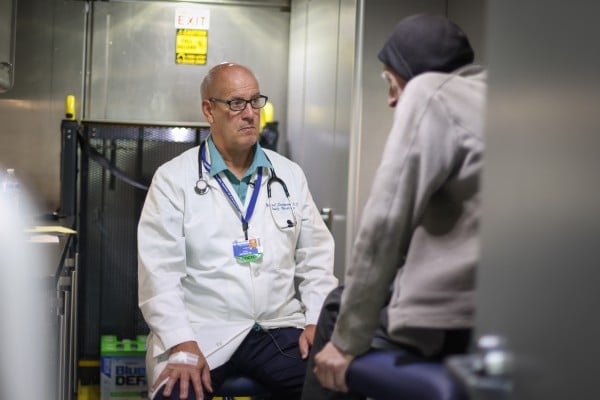 Dr. Seidman met a man while working with the Northeast Ohio Coalition for the Homeless. He was living unsheltered and sleeping near city heat grates during the winter. One night, he suffered severe third-degree burns to both feet.
He refused hospitalization. He declined the burn unit. He wouldn’t enter a clinic.
But he allowed conversation.
Week after week, Dr. Seidman returned. Care happened slowly – sometimes on the street, sometimes not at all. Trust ebbed and flowed. Over seven months, nurses provided wound care through the mobile unit. Infection was avoided. Healing took time.
Eventually, he no longer needed his wheelchair. With help from community partners, he moved into housing.
When he stepped into his apartment for the first time, he paused and said, softly, “Wow. This is nice.”
This transformation did not happen in a single visit. It happened because MetroHealth showed up – again and again.
Why This Giving Priority Matters
At its core, Healthcare for Those Experiencing Homelessness is about dignity, trust and belonging.
It is about recognizing that health cannot wait until housing is secured. It is about listening to patients’ priorities. It is about providing respectful, high-quality care to people who have too often been overlooked.
In a time when those seen as “others” face mounting barriers, MetroHealth chooses a different path: actively seeking people out rather than waiting for them to come in.
“We’re showing people that they matter,” Dr. Seidman said.
With your support, the Community Health team will continue to bring care directly to our neighbors experiencing homelessness – removing barriers, building trust and creating pathways to healthier, more stable lives.
To expand this work, The MetroHealth Foundation has set a fundraising goal of $300,000. These philanthropic dollars will strengthen mobile outreach, support essential tools like the planned mobile EKG unit and critically, help sustain the mobile clinic itself. Unlike traditional brick-and-mortar settings, every aspect of care in this model relies on the mobile unit. Without a functional, fully equipped mobile unit, there is no clinic to bring into the community.
“It is the existence of this mobile unit that allows Metro to go to people whose social determinants of health make it challenging for them to get to us. It is the mobile unit that helps Metro fulfill its mission statement of providing care to all,” Dr. Seidman said.
Your generosity keeps this mission on the move – powering the vehicle, the care inside it and the relationships built every time MetroHealth shows up.
For more information, please contact Greg Sanders, Vice President of Philanthropy, at 440-592-1319 or gsanders@metrohealth.org.
Your Generosity Means a Healthier Greater Cleveland
Support MetroHealth in its commitment to care for all.