Giving Every Child a Lead-Free Start
Published on 07/14/2026
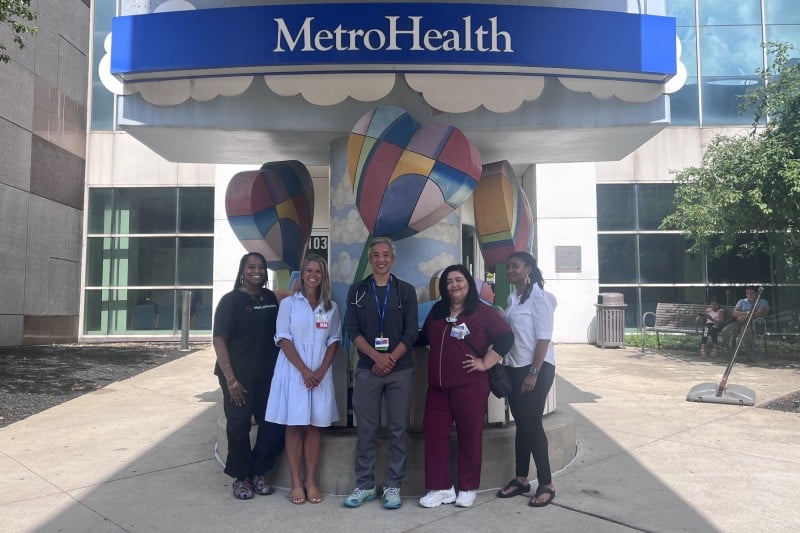
Alia Robertson, Pediatric Lead Community Health Worker; Jen Conti, Director of Care Transformation and Population Health; Dr. Matthew Tien, Pediatrician; Lory Rosa, Pediatric Lead Nurse in Population Health; and Natalie Harper, Community Health Advocacy Initiative Manager.
It’s fun to watch toddlers gain their independence. Their eyes light up and smiles spread wide as little hands and feet carry them off to explore and discover the world around them. And while adults watch in joy, they are also looking for everyday dangers like stairs, sharp corners and electrical outlets.
Those living in homes built before 1978 must also be concerned about the hazards of lead paint, which can cause neurologic disorders, stunt growth, affect reproductive health and contribute to heart problems later in life. Elevated lead levels can also cause cognitive and learning issues.
As such, MetroHealth views lead exposure as much more than a pediatric issue to be addressed early. It’s a housing issue and a social driver of health for many, especially in Cleveland, where approximately 90% of the city’s housing stock was built before 1978, when the federal government banned lead-based paint for residential use.
As a result, Cleveland has been identified as one of the nation's most challenging areas for childhood lead exposure, as demonstrated in a 2019 study by Case Western Reserve University, which found that 25% of kindergartners in the Cleveland Metropolitan School District had elevated lead levels.
Such statistics have spurred a variety of responsive efforts, including MetroHealth’s Childhood Lead Prevention initiatives, which address exposure from pregnancy through early childhood.
MetroHealth’s Obstetrics (OB) Lead Screening Project is uniquely designed to intervene before a child is even born. The goal is to give every baby a healthy start by being discharged to a lead-safe environment.
Under the program, one pregnant patient was identified as being at risk for lead hazards in her home. An inspection showed that the patient had chipped, peeling lead-based paint on her front porch. Through the program, the patient was able to get her entire front porch painted, making the home a lead-safe environment.
Launched three years ago through generous donations, the program started with expectant mothers, said Jen Conti, Director of Care Transformation and Population Health at MetroHealth.
“When a patient comes to an obstetric appointment, we now include a few questions about her exposure to lead,” Jen said. “We ask if she lives in an older home or if she has had kids with elevated lead levels. If she answers yes to any of those questions, the family might be at risk for lead exposure, so the mother is referred to a specialist.”
The specialist starts by educating the mother on the impact of lead exposure and provides a home cleaning kit. To date, approximately 80% of OB patients identified as at risk for lead hazards have received at least one intervention.
The key is to start by thinking about a toddler’s actions as they become mobile. They explore and learn by picking things up and putting them in their mouths.
“We educate parents on cleaning windowsills because that is the biggest problem,” Jen said. “Children frequently play near windows, where lead dust accumulates.”
The MetroHealth Pediatric Lead Team has even branched out into the community. In addition to improving lead screening rates for the children we see in our offices, the Pediatric Lead Team brings portable lead-testing equipment to places such as daycare centers, health fairs and events hosted by the Cleveland Metropolitan Housing Authority, a MetroHealth partner.
The machine enables them to do a small finger prick on children to test their lead levels, and results are ready within three minutes, said Natalie Harper, Community Health Advocacy Initiative Manager. If a child's test shows elevated blood lead levels, the team schedules a follow-up appointment, she said.
Lory Rosa, the Pediatric Lead Nurse in Population Health at MetroHealth, is responsible for tracking down those who miss their appointments to ensure the child’s health. The team’s efforts seem to be working.
She said the number of Cleveland children needing follow-up care is declining, with 15.8% still showing elevated blood lead levels, but the problem is far from solved.
“Lead is like not mowing the lawn. If you don’t stay on top of it, it comes back,” Lory said. “Unless we are able to tear down every old home in Cleveland and rebuild it, we will not eradicate the problem.”
MetroHealth knows that all-encompassing patient care means going beyond medical appointments in a clinic. It requires identifying and addressing the root causes of health problems, then removing obstacles and engaging community partners to help people access the resources they need to live their best lives.
Your support helps ensure that every child born at MetroHealth can begin life in a safe, healthy home – free from the dangers of lead. Together, we can address the root causes of poor health and create lasting change for Cleveland families.
To support this program, please contact Greg Sanders, Vice President of Philanthropy, at 440-592-1319 and gsanders@metrohealth.org. Make an online gift here.
Your Generosity Means a Healthier Greater Cleveland
Support MetroHealth in its commitment to care for all.