Food as Medicine: Turning Access into Lasting Change
Published on 06/10/2026
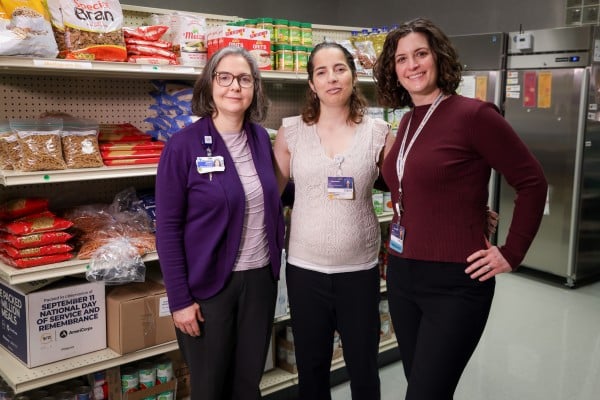
Jennifer Bier, Asya Aretskin-Hariton and Kristen Matlack
Inside MetroHealth’s Food as Medicine (FAM) clinic on the Main Campus, Kristen Matlack, Jennifer Bier and Asya Aretskin-Hariton described how access to something as basic as healthy food can change the trajectory of a patient’s life.
Part of MetroHealth’s Institute for H.O.P.E.™, the FAM clinic is a referral-based program designed to support patients living with chronic conditions like diabetes, hypertension and heart failure – conditions often made worse by food insecurity. Here, care goes beyond prescriptions to address one of the most powerful drivers of health: access to nutritious food.
When a patient’s care team identifies food insecurity as a barrier to better health, that patient is referred to the clinic. Eligible participants can visit up to twice a month, receiving a three-day supply of healthy food for their household each time, along with nutrition education tailored to their medical needs and personal circumstances. For those unable to travel, food can even be delivered to their homes, ensuring continuity of care.
They are also supported by a dedicated team that includes dieticians like Jennifer Bier.
“Participants in Food as Medicine are receiving medically tailored groceries,” said Jennifer, Manager of Outpatient Nutrition, Quality Coordinator for the Diabetes Education Program, Dietetic Intern Director and Manager of the FAM staff. She has served MetroHealth for more than 20 years. “We walk them through choosing foods from each food group,” Jennifer said.
The program emphasizes a “fresh choice first” approach, prioritizing fresh produce while giving patients flexibility to select foods that work for them and their families.
“We empower people to take action that is consistent with their lifestyle and long-term health,” said Asya, Clinical Coordinator for the FAM program. “We offer patients as many options as possible within each food group so they can build a system that works for them,” Asya said.
The impact is measurable. Participants are eating more fresh foods, reducing reliance on processed options and seeing improvements in key health indicators like A1C levels, hospitalizations and overall healthcare costs. Just as importantly, they are gaining confidence, learning that healthier living is within reach.
For Kristen, Manager of Social Care Initiatives at the Institute for H.O.P.E.™, those outcomes are best understood through the patients themselves.
She recalls one older, disabled man living with uncontrolled diabetes who lacked access to nutritious food and didn’t feel confident cooking.
“At first, he didn’t want to try any of the healthy options,” Kristen said. “He didn’t believe he could cook or that it would make a difference.”
Over time, with support from the FAM team, he began to try new foods and build basic cooking skills. His health began to improve, and so did his outlook.
That confidence is on full display during hands-on cooking classes, held at the MetroHealth Opportunity Center at Via Sana. FAM participants gather in the kitchen and watch as a dietician prepares featured recipes, asking questions and learning how to prepare a simple, affordable meal using healthy ingredients.
“The cooking class is a chance for our participants to build skills and try foods that may be less familiar to them,” said Jennifer.
Together, the clinic visits and cooking demonstrations combine access, education and hands-on support to help patients build lasting habits.
This life-changing work is made possible entirely through philanthropy. Donor support keeps shelves stocked, funds nutrition education, enables home delivery and sustains the team members who walk alongside patients every step of the way.
In 2025 alone, the program provided nearly 48,000 meals, supported more than 1,800 clinic visits and delivered food to patients facing the greatest barriers to access.
Behind those numbers are real people – neighbors across our community – who are experiencing better health, greater stability and renewed hope.
When you support FAM, you are not just providing groceries. You are helping patients manage chronic disease, avoid hospital visits and build healthier futures for themselves and their families.
Your generosity turns food into medicine – and medicine into lasting change.
To support the Food as Medicine program, contact Greg Sanders, Vice President of Philanthropy, at 440-592-1319 or gsanders@metrohealth.org. To make an online gift, click here.
Your Generosity Means a Healthier Greater Cleveland
Support MetroHealth in its commitment to care for all.