Where Health and Justice Meet: The Community Advocacy Program at MetroHealth
Published on 04/27/2026
At MetroHealth, health is shaped by far more than what happens in an exam room. For many patients, the greatest threats to well‑being stem from housing instability, disrupted education, loss of health benefits, food insecurity, immigration issues for victims of violence or crime, and systems too complex to navigate alone. For more than two decades, the Community Advocacy Program (CAP) has ensured that when those barriers arise, legal advocacy is already part of care.
Established in 2002 as a partnership between The MetroHealth System and The Legal Aid Society of Cleveland, CAP was the first medical‑legal partnership in Ohio and one of the earliest in the nation. Today, it stands as a nationally recognized model for integrating legal support into healthcare – addressing the root causes of poor health outcomes and social drivers of health that medicine alone cannot resolve.
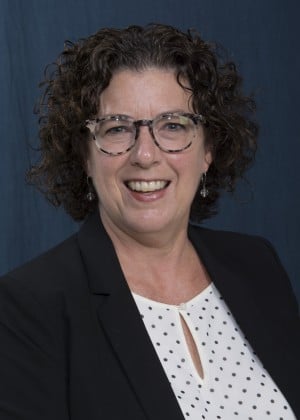
Karen Cook, MPH, Director of Healthy Families & Thriving Communities at MetroHealth’s Institute for H.O.P.E.™, views CAP as a direct expression of MetroHealth’s mission to advance healthcare for all and remove barriers to care. Many of MetroHealth’s patients face compounding challenges, often without access to legal guidance. CAP brings that support directly into healthcare settings, allowing patients to receive help where they already feel safe and supported.

Operating under the Institute for H.O.P.E.™, CAP integrates Legal Aid attorneys into clinics across the health system, making legal advocacy as accessible as a medical referral. Natalie Harper, Community Health Advocacy Initiative Manager, emphasizes that this integration is intentional and essential. Providers are trained to recognize when a health concern is tied to a legal issue. Referrals are placed directly through MetroHealth’s Epic electronic health record, allowing attorneys to become part of the care team without delay.
This embedded model allows CAP to respond early, before challenges escalate into a crisis. In 2025 alone, CAP attorneys managed 399 cases, impacting 1,194 individuals and children. Cases span the full range of social drivers of health, including:
- education and special education advocacy,
- housing safety and eviction prevention,
- support for victims of violence,
- immigration issues for victims of crime,
- health and food insecurity,
- support for seniors, pregnant and newly parenting families, and
- individuals affected by opioid use disorder.
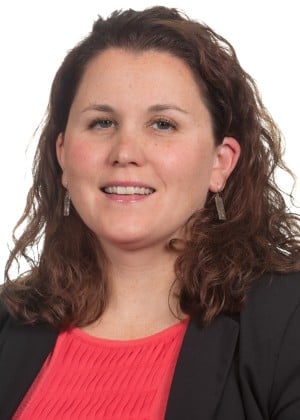
Sustaining that breadth of service depends on a strong partnership. Katie Laskey‑Donovan, Senior Attorney with the Community Advocacy Program at The Legal Aid Society of Cleveland, points to the longevity of the MetroHealth–Legal Aid partnership as one of CAP’s greatest strengths. Attorneys are not brought in as outside consultants; they are embedded as colleagues – training caregivers, mentoring residents and offering curbside consultations that help providers advocate more effectively for patients even before a legal case begins.
Katie spends much of her time embedded at MetroHealth’s Ohio City Health Center, where many patients already have trusted relationships with caregivers. That trust is critical. A significant portion of her caseload comes directly from MetroHealth referrals, allowing patients to seek legal help in the same place they receive medical care.
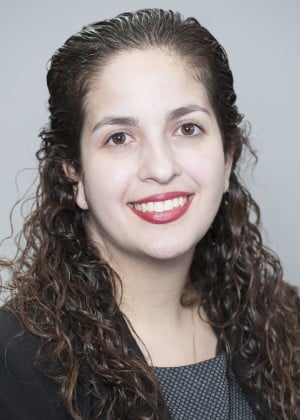
That seamless connection between care and advocacy is especially visible in the work of attorneys like Jessica Baaklini, Senior Attorney with the Community Advocacy program at The Legal Aid Society of Cleveland, who is embedded within Pediatrics and Obstetrics at MetroHealth’s Main Campus. Jessica works for and with low-income families navigating complex medical needs alongside legal uncertainty, often at moments when they feel overwhelmed.
One family she supported included a mother caring for two sons with disabilities while managing health challenges of her own. One child, who is diagnosed with severe autism spectrum disorder and is often nonspeaking due to his disabilities, had been placed on home instruction and was not receiving the supports in his Individualized Education Program (IEP). Over time, the lack of structure and peer interaction slowed his progress and intensified behavioral challenges. His brother, diagnosed with ADHD and learning disabilities, had an IEP also, but the supports were not being provided due to transitions between school districts.
Because their pediatrician had been trained through CAP to recognize civil legal barriers to health, the family was connected directly to Jessica during a clinic visit. Through education advocacy and collaboration with school systems, appropriate services and learning environments were put in place for both children. The impact extended well beyond academics. With her sons supported, the mother regained stability and relief, allowing her to focus on her own health while continuing to advocate for her family.
For Karen Cook, Natalie Harper, Katie Laskey‑Donovan and Jessica Baaklini, stories like this underscore why CAP exists.
While targeted public and philanthropic grants have supported the expansion of CAP services to reach new populations – including individuals affected by the opioid crisis and patients receiving obstetric care – all Community Advocacy Program services are provided at no cost to patients and are not reimbursable through insurance. As a result, the program is sustained entirely through philanthropy, whether support is directed through The MetroHealth Foundation or The Legal Aid Society of Cleveland. Donor support ensures that attorneys remain embedded in clinics and that legal advocacy is fully integrated into patient care.
Donor support allows the Community Advocacy Program to:
- Keep attorneys embedded where care happens.
- Train healthcare providers to identify legal barriers to health.
- Intervene early when families’ stability – and health – are at risk.
CAP stands as a powerful example of what is possible when justice is recognized as an essential component of healing. When legal advocacy becomes part of healthcare, patients do not have to choose between healing and stability. Through the Community Advocacy Program, they gain access to both.
To support the Community Advocacy Program, please contact Greg Sanders, Vice President of Philanthropy, at 440‑592‑1319 or gsanders@metrohealth.org. Or make an online gift.
Your Generosity Means a Healthier Greater Cleveland
Support MetroHealth in its commitment to care for all.