Giving Priorities
The Foundation is focused on addressing the needs of the community in critical areas.
Top Funding Priorities 2026
Every gift to the MetroHealth Foundation – whether from a small family or a Fortune 500 company – demonstrates a commitment to caring for the community, just as MetroHealth has done since it opened in 1837.
Our focus is on critical needs in the following areas:
MetroHealth’s Main Campus ED is often the first point of contact for those in crisis. Nearly 79,000 people visited the ED in 2024 alone, with daily visits averaging 210 and sometimes reaching 250. In fact, nearly 80% of all hospital inpatients began their journey in the ED, making it truly the “front door” to the hospital. The Main Campus ED, which was last renovated more than 20 years ago, is well-worn and greatly in need of upgrades to provide the best possible experience for patients during their most critical health moments. Phased renovations, beginning in 2026, are anticipated to maintain access to life-saving care, beginning in 2026. These upgrades will modernize the space to meet the demands of today’s emergency care, create more welcoming and therapeutic surroundings and empower our caregivers with the tools and environment they need. The Samuel H. Miller Foundation has generously pledged $3 million to help bring this vision to life, but more partners and champions are needed to realize it.
For more information, please contact Debbie Rothschild, Director of Principal Gifts, at 440-592-1399 or drothschild@metrohealth.org.
MetroHealth’s new Outpatient Health Center (OPHC) is the next bold step in our Campus Transformation – a vision to make care more accessible, coordinated and patient-centered for every person in the community. Scheduled to open in Spring 2026, this six-story, 307,000-square-foot facility represents a $224.3 million investment in access, innovation and whole-person care. Located adjacent to The Glick Center, the OPHC will bring dozens of specialties together under one roof – eliminating the need for patients to travel between multiple locations for appointments, imaging and follow-ups. The state-of-the-art facility features:
- More care in one place including an expanded Breast Care Center, Cancer Institute, Pediatrics, OB-GYN, Orthopaedics, Neurology, Neurosurgery, Physical Medicine & Rehabilitation, Infectious Diseases, Heart & Vascular, Radiology, Occupational Therapy, Surgical Specialties, Blood Lab and more.
- Guest-focused design – Welcoming, calming environments that reduce anxiety and improve the patient experience.
- Convenience and dignity – Simplified wayfinding, larger exam rooms, accessible bathrooms and a climate-controlled walkway from the parking garage.
- A drive-thru pharmacy that will be open 24/7 for patients and community members.
The Outpatient Health Center is more than a building – it’s a new way to deliver care. It’s the next step in our vision for the future of healthcare – a future where everyone in our community can become their healthiest selves. Because healthy changes everything.
For more information, please contact Greg Sanders, Vice President of Philanthropy, at 440-592-1319 or gsanders@metrohealth.org.
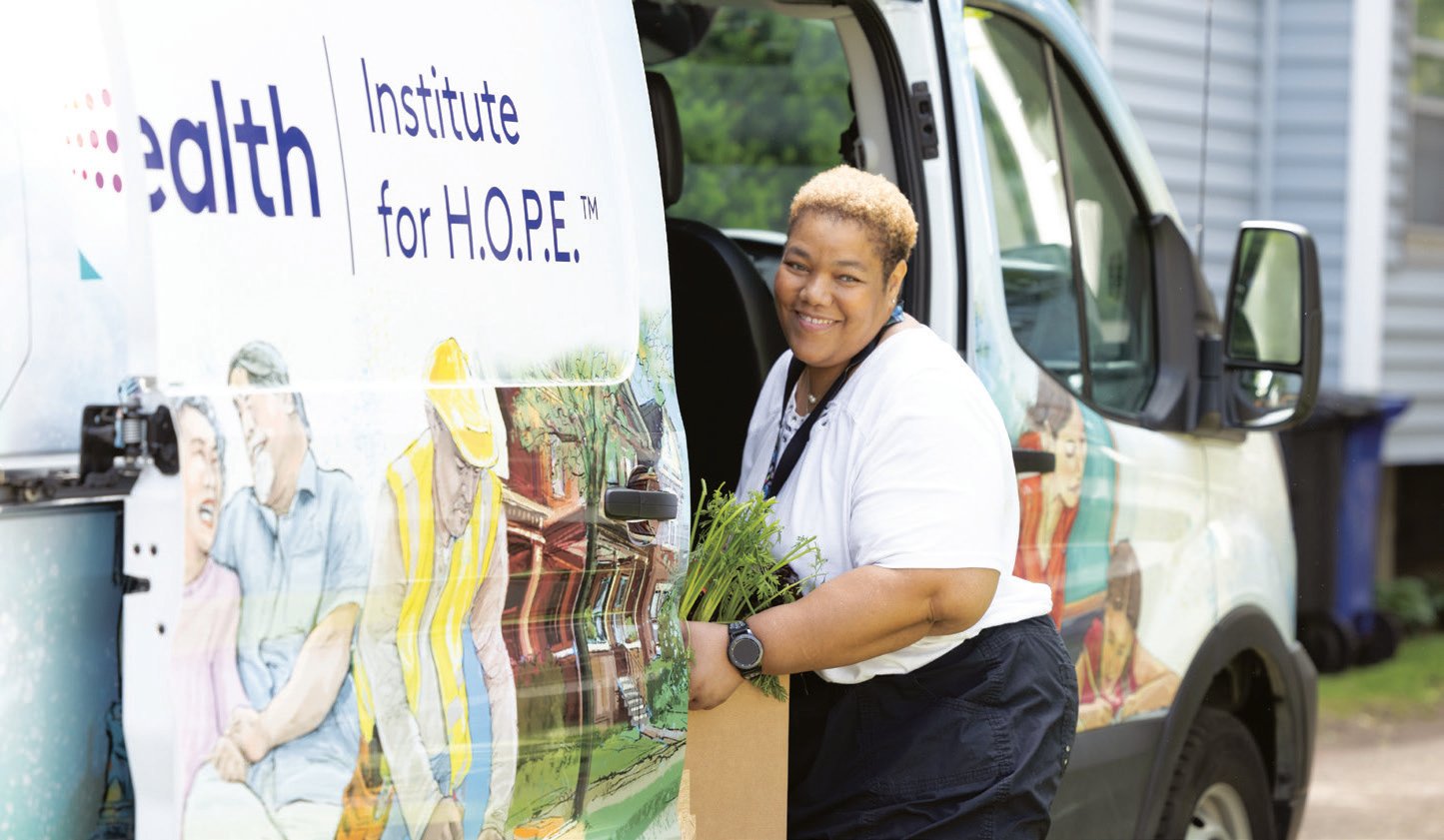
MetroHealth’s Institute for H.O.P.E. (I4HOPE) focuses on the social drivers that impact health, which the World Health Organization defines as “the conditions in which people are born, grow, live, work and age.” Through the I4HOPE, MetroHealth can assess a more complete picture of patients’ lives, including social needs such as access to healthy food, safe housing, transportation, education and job opportunities through the Opportunity Centers (generously funded by the KeyBank Foundation), and more. Doing so helps improve patients’ overall physical, emotional and financial well-being—beyond the medical issues that are being addressed by MetroHealth providers. Gifts to the General I4HOPE Fund can be used to support the immediate needs of I4HOPE programs, such as:
- Community Advocacy Program: A Medical-Legal Partnership - MetroHealth caregivers team with attorneys from The Legal Aid Society of Cleveland to help patients overcome barriers to good health, including issues related to aging, immigration, housing, education, learning disabilities and special needs, benefits, behavioral health and more.
- Center for Arts in Health – Integrates the visual, performing and therapeutic arts in hospitals, clinics, schools and neighborhoods for the benefit of patients, families, caregivers and the greater community. Embedded within the I4HOPE, the Center ensures that the arts play a valuable role in addressing the social drivers of health.
- Center for Community Health Innovation & Integration – Community health workers (CHWs) help patients navigate the healthcare and social service systems by connecting them to resources that promote, maintain and improve their health. With an expert understanding of the community they serve, CHWs address social drivers of health and root causes of poor health, including unstable housing, food insecurity, racial discrimination, employment access and intimate partner violence.
- Trauma Recovery Center – The MetroHealth Trauma Recovery Center (TRC) facilitates comprehensive healing for survivors of all types of trauma and interpersonal violence—physical and sexual assault, domestic and community violence, homicide loss and motor vehicle accidents—as well as their family members, which helps survivors recover and redefine their lives. The TRC builds healthy connections with trauma survivors to enhance safety and trust by providing access to resources, educating survivors of their rights and advocating for just and holistic healing services for all. These services make a difference for survivors as they recover and redefine their lives. Additionally, the annual Resiliency Run, now in its 10th year, honors trauma survivors and benefits the TRC through sponsorship opportunities.
For more information, please contact Greg Sanders, Vice President of Philanthropy, at 440-592-1319 or gsanders@metrohealth.org.
Food insecurity and health are deeply connected. Individuals with limited or uncertain access to food are disproportionately affected by diet-sensitive chronic illness such as diabetes and hypertension, as well as other adverse effects to overall health. Through the MetroHealth Food as Medicine program, a medically tailored grocery initiative, eligible patients visit a clinic-based food pantry twice per month where they receive healthy food for their entire household and nutritional education. Nourish Today, a medically tailored meals pilot program, will launch in 2026 in partnership with the Greater Cleveland Food Bank with the goal of providing 40 participants with 10 healthy meals per week.
For more information, please contact Greg Sanders, Vice President of Philanthropy, at 440-592-1319 or gsanders@metrohealth.org.
Through its Center for Healthy Families & Thriving Communities, the I4HOPE works with community partners to help patients who have screened at risk for SDOH related to housing. Current programs include:
- Aging in Place provides low-cost, high-impact home modifications and occupational therapy assessments that address falls risks, allowing patients to age in place for as long as possible.
- Lead Screening Project prevents lead exposure in newborns by providing education, screening and intervention for pregnant patients.
For more information, please contact Greg Sanders, Vice President of Philanthropy, at 440-592-1319 or gsanders@metrohealth.org.
Launched in 2013, the School Health Program (SHP) began as a single clinic in a converted classroom of an east-side Cleveland elementary school. It has since evolved into a national model for school-based health, providing clinical services for more than 6,200 students through five academic partnerships supporting nearly 30 schools throughout Cuyahoga County. A dedicated team of providers, nurses, program assistants, drivers and community health workers have cultivated strong relationships with students, earning their trust. The mission of MetroHealth’s SHP is “to improve access to healthcare by partnering with the community, advocating for, and supporting the health and well-being of our children." This mission is achieved through four main priorities: increasing access to care and services, implementing a population-health model for care delivery, providing mental health screening and education, and enhancing health and education outcomes. These priorities are guided by the program's goal of supporting the whole child, whole school, and whole community. SHP services have improved health outcomes, school attendance and grade point averages.
For more information, please contact Greg Sanders, Vice President of Philanthropy, at 440-592-1319 or gsanders@metrohealth.org.
Since 2020, the work of MetroHealth’s Community Health team has been a lifeline for individuals experiencing homelessness across Cuyahoga County. What began as a COVID-19 response effort has grown into an ongoing mission: bringing compassionate, accessible and consistent healthcare directly to people who often have nowhere else to turn. In partnership with local nonprofit organizations, the team meets individuals where they are—at shelters, day centers and supportive housing sites—providing essential care, building trust and helping people navigate a path toward better health and stability. The team provides a wide range of essential medical care—from treating everyday health concerns and managing chronic conditions to offering testing, immunizations and behavioral health support; addressing patients’ social determinants of health needs; and providing connections to ongoing primary and specialty care. At its core, the Healthcare for Those Experiencing Homelessness outreach program is about dignity, equity and removing barriers so that every person in our community has the chance to be healthy and supported.
For more information, please contact Greg Sanders, Vice President of Philanthropy, at 440-592-1319 or gsanders@metrohealth.org.