Every Second Counts
During a stroke, with each minute that passes, about 2 million brain cells die. Getting the right care at the right time can mean the difference between major and minor stroke effects. After the crisis passes, additional care is required for you to recover your health, your abilities and your life.
If you or someone you love is experiencing stroke symptoms, call 911. An emergency medical services (EMS) team will transport you to the hospital. Your care starts when ambulance crews alert the hospital they are en route. When the ambulance arrives, our stroke team will meet you at the door. The primary goal of this rapid assessment is to determine if a clot-dissolving medicine, called tissue plasminogen activator (tPA), can be given. This powerful drug can restore blood flow to the brain and reverse the negative effects of a stroke. The time window to give this drug is very small—three hours from the start of symptoms. Rapid transport by EMS is essential.
The time it takes a hospital to give tPA to an eligible stroke patient is known as "door to needle time." In 2021, the median time from arrival to IV tPA infusion was 32 minutes with nearly 40% treated in < 20 minutes.
In addition to tPA, minimally invasive procedures to remove the clots or repair the aneurysms that cause brain bleeding are available 24/7. Neurointerventional radiologists can inject tPA directly to a blockage or extract the clot from the blocked blood vessel to restore blood flow to the brain as quickly as possible.
MetroHealth’s stroke team has earned prestigious American Heart Association/American Stroke Association awards for quality and performance.
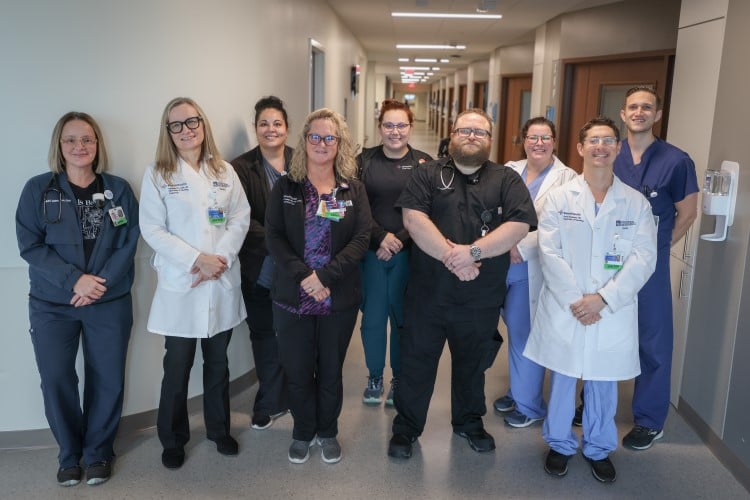
Inpatient Neurology Team